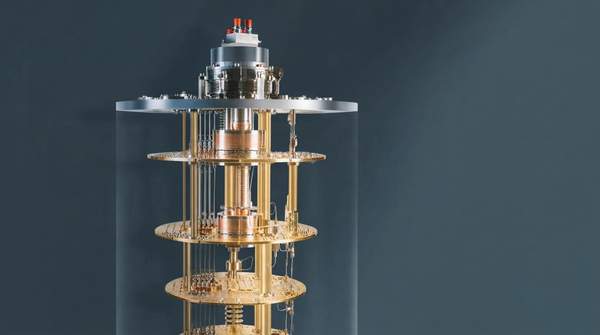
The immense promise of quantum computing rests on a diverse family of algorithms, but their practical application is not a monolith. A crucial distinction divides the field's most prominent algorithms into two distinct timelines: those designed for powerful, error-corrected quantum computers of the future, and those tailored to work on the noisy, imperfect machines available right now. Understanding this division is essential for separating near-term industrial potential from long-term, revolutionary ambition.
On one side are algorithms like Shor's and Grover's, famous for their theoretical power to break modern encryption and transform database searches. Their demands for precision and scale place them firmly in the category of applications for future, fault-tolerant quantum computers. On the other side are hybrid algorithms such as the Variational Quantum Eigensolver (VQE) and the Quantum Approximate Optimization Algorithm (QAOA). These are engineered specifically for the current Noisy Intermediate-Scale Quantum (NISQ) era. By strategically dividing their workload between quantum and classical processors, they offer a pragmatic path toward solving meaningful problems on today's error-prone systems.
Shor's and Grover's Algorithms: The Promise of Fault-Tolerant Computing
Some of the most transformative quantum algorithms remain on the horizon, awaiting the development of large-scale, fault-tolerant quantum computers. These future machines, which must be capable of actively correcting the errors inherent in quantum calculations, are a prerequisite for unlocking the full potential of algorithms like Shor's and Grover's. Their computational power is immense, but so are their hardware requirements.
Shor's algorithm, for instance, is designed to find the prime factors of large numbers with an efficiency that classical computers cannot achieve. Since the difficulty of this exact problem is the foundation of widely used public-key cryptography systems like RSA, Shor's algorithm presents a significant challenge to global data security. A paper in the International Journal of Fundamental and Multidisciplinary Research notes that its ability to break standard classical encryption makes it a critical threat to existing digital infrastructure. However, executing Shor's algorithm on a number large enough to be cryptographically relevant requires a vast number of high-quality, error-corrected quantum bits (qubits), a capability far beyond today's hardware.
Similarly, Grover's algorithm provides a quadratic speedup for searching through unstructured data. This means it can find a specific item in a massive, unsorted list significantly faster than any classical method. Its applications extend beyond simple database searches to include a range of optimization problems where sifting through countless possibilities is the primary bottleneck. Like Shor's, Grover's algorithm needs a fault-tolerant quantum computer to operate at a scale where its speed advantage becomes truly practical, placing its widespread deployment firmly in the future.