
Marcus Cole
Editorial byline
Marcus Cole is an editorial byline for Science and Discovery, with a focus on Breakthrough Medical Treatments, Genetics and Ancestry, The Human Microbiome. Biographical credentials and external profiles are published only after verification.
Learn more about our editorial process and use of automation in our AI & Automation disclosure.
Coverage Areas
Latest Articles

One Platform, Three Goals: How mRNA Technology Is Being Retooled for Cancer and Autoimmune Disease
The mRNA technology behind COVID-19 vaccines is a flexible platform that can be retooled to instruct cells to produce specific proteins. This adaptability allows it to train the immune system to attack pathogens or cancer cells, or to induce tolerance in autoimmune diseases.
Nov 10, 2026 · 4 min read
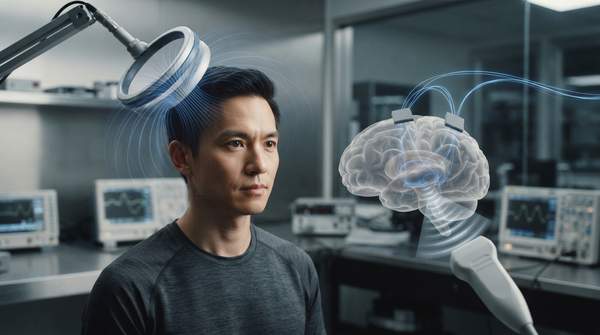
Magnetic Fields, Weak Currents, and Sound Waves: How the Four Main Non-Invasive Brain Stimulation Techniques Differ
This article differentiates four primary non-invasive brain stimulation (NIBS) techniques—TMS, tDCS, tACS, and focused ultrasound—based on their physical mechanisms, precision, and depth of brain access. Understanding these distinctions is key to selecting the appropriate method for research or therapeutic applications.
Nov 9, 2026 · 6 min read
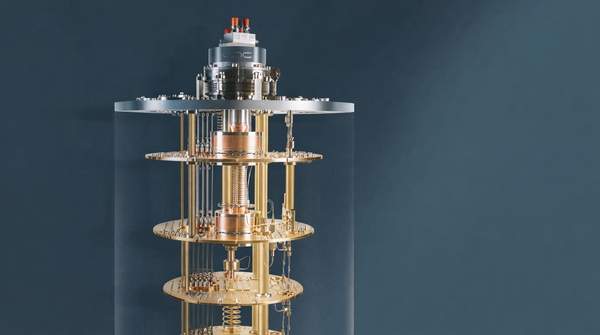
Quantum Error Mitigation vs. Quantum Error Correction: Post-Processing Today, Redundancy Tomorrow
Quantum Error Mitigation (QEM) uses classical post-processing to filter noise from quantum computations on current hardware, while Quantum Error Correction (QEC) employs redundant qubit encoding for real-time error detection and correction, a goal for future fault-tolerant machines.
Nov 8, 2026 · 5 min read

Dark Matter vs. Dark Energy: Two Invisible Rulers of the Cosmos
Dark matter and dark energy, comprising over 95% of the universe, are distinct invisible forces. Dark matter acts as cosmic glue, holding galaxies together through gravity, while dark energy drives the accelerated expansion of space.
Nov 7, 2026 · 5 min read
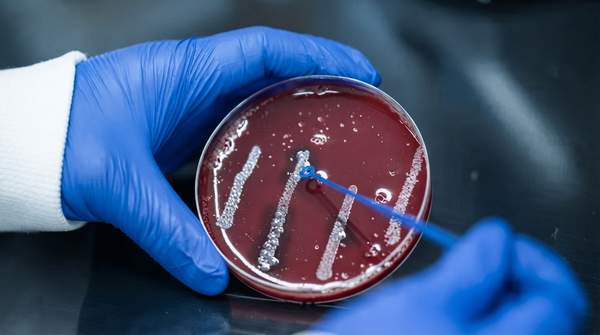
Four Microbiome Therapies, Four Very Different Levels of Proof: What Actually Works for Gut Health
Not all microbiome therapies are created equal; evidence ranges from conditional recommendations for Fecal Microbiota Transplant (FMT) to investigational status for bacteriophage therapy. Understanding the varying levels of proof is crucial for discerning what actually works for gut health.
Nov 6, 2026 · 5 min read
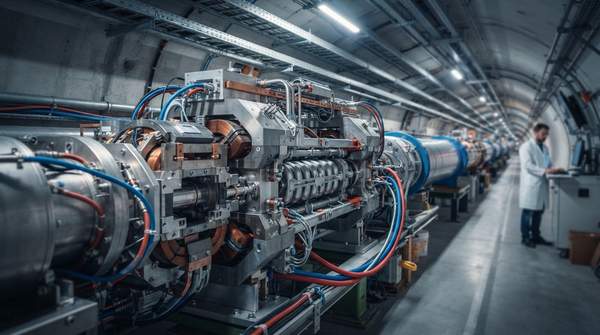
How Particle Accelerators Work: Electric Fields Push, Magnetic Fields Steer
Particle accelerators use electric fields to boost particles to high energy and magnetic fields to steer them, enabling scientists to probe fundamental physics by smashing particles together and recording the results. The two main types, linear and circular, serve different experimental needs in unlocking the universe's secrets.
Nov 6, 2026 · 4 min read
Memory Beyond the Brain: How Cells, Immunity, and Epigenetics Store Information
Biological memory extends beyond the brain, with cells, the immune system, and epigenetics storing and utilizing past information through distinct mechanisms, durations, and roles.
Nov 5, 2026 · 4 min read

Deep-Sea Neutrino Experiment Finds No Crack in Einstein's Relativity—But Sharpens the Search
A deep-sea neutrino experiment, KM3NeT/ORCA, tested a core principle of Einstein's relativity, Lorentz invariance, finding no violation. The study has established new, stringent experimental limits, sharpening the search for potential deviations in fundamental physics.
Nov 5, 2026 · 4 min read
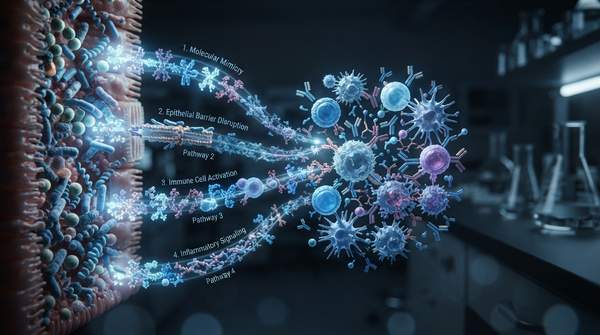
Four Pathways: How Gut Microbes Push the Immune System Toward Autoimmunity
Gut microbes can drive autoimmune diseases through four main pathways: molecular mimicry, intestinal barrier disruption, T-cell differentiation modulation, and microbial metabolites. These mechanisms highlight the microbiome's dynamic role in regulating immune tolerance and self-attack.
Nov 2, 2026 · 7 min read

Beyond the Goldilocks Zone: Why Distance From a Star Is Only the First Question
The traditional "Goldilocks Zone" is an incomplete model for exoplanet habitability, as factors like internal heat, geological activity, and stellar characteristics are crucial for determining a planet's potential to support liquid water and life. A holistic approach is needed to expand the search for habitable worlds.
Nov 1, 2026 · 5 min read
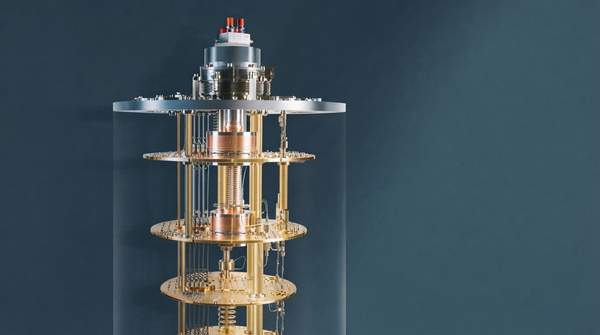
Stability vs. Connectivity: How Three Quantum Architectures Balance Competing Qubit Needs
Quantum computing architectures face a core dilemma: qubits need stability to retain quantum information but connectivity to interact for computation. This article explores how superconducting, trapped-ion, and neutral-atom systems balance qubit stability versus connectivity, influencing their scalability and error correction.
Oct 31, 2026 · 5 min read
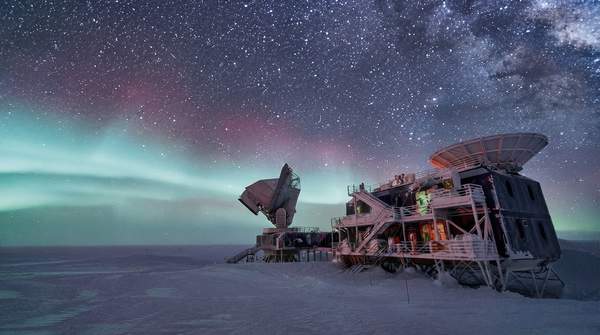
How Scientists Read the Universe's Blueprint in the Cosmic Microwave Background
The Cosmic Microwave Background (CMB) is relic radiation from the early universe, filled with tiny temperature variations called anisotropies. Scientists decode these variations, feature by feature, into precise numbers that define our cosmos, including its geometry and matter mix.
Oct 31, 2026 · 4 min read

Two Treatment Philosophies Shape the Sickle Cell Pipeline: One-Time Gene Therapy Versus Daily Oral Medicine
The sickle cell disease treatment pipeline is bifurcated between potentially curative one-time gene therapies and chronic oral disease-modifying medicines. Hematologists express enthusiasm for both approaches, recognizing the distinct benefits and challenges each offers patients.
Oct 30, 2026 · 4 min read
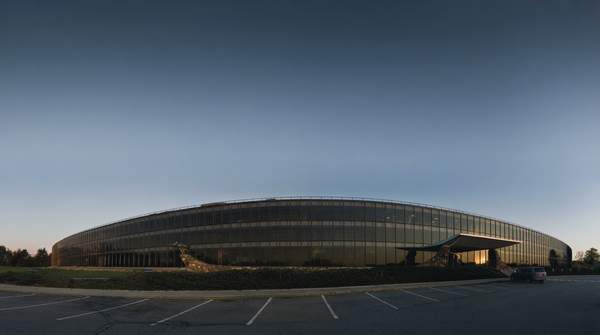
Quantum Supremacy, Explained: Google's 2019 Claim and IBM's 2.5-Day Rebuttal
Google claimed quantum supremacy in 2019 with its Sycamore processor, but IBM quickly countered, sparking a debate over the definition and measurement of this milestone. The discussion highlights the evolving terminology from "supremacy" to "advantage" and "utility" as quantum computing matures.
Oct 30, 2026 · 4 min read

How AI Proves Theorems: Two Paths From Plausible Argument to Verified Proof
Artificial intelligence aids mathematical research through two distinct paths: intuitive, yet error-prone, natural language proofs from LLMs, and machine-checkable, yet less intuitive, formal verification using tools like Lean. The mathematics community distinguishes between these, emphasizing that formal correctness does not equate to human understanding or acceptance.
Oct 28, 2026 · 5 min read

Inside Stanford's Virtual Biotech: 37,000 AI Agents and the Three Discovery Tasks They Performed
Stanford Medicine researchers have developed a "virtual biotech" company composed of 37,000 AI agents, demonstrating its capability to perform three critical early-stage drug discovery tasks: target prioritization, cancer target validation, and analysis of failed clinical trials.
Oct 27, 2026 · 5 min read
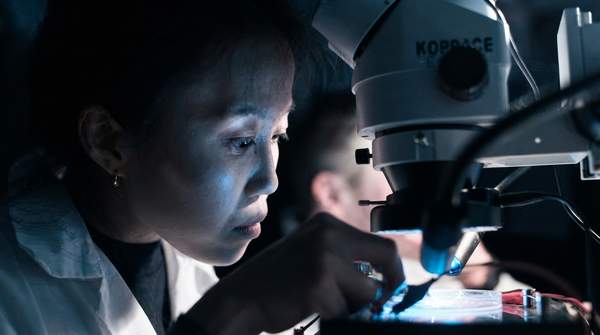
Three Ways Scientists Study Antimatter: Trapped Antiprotons, Falling Antihydrogen, and Collider-Made Antiparticles
Scientists employ three distinct methods to study antimatter: precise measurements of trapped antiprotons, testing gravity with neutral antihydrogen, and producing antiparticles in high-energy collisions. These approaches are crucial for testing fundamental physics principles like CPT symmetry and the weak equivalence principle.
Oct 27, 2026 · 5 min read
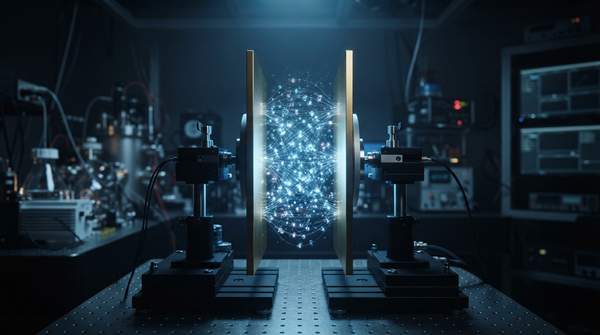
The Casimir Effect: How Quantum Fluctuations Push Two Plates Together
The Casimir effect describes a measurable force that pulls two uncharged metal plates together in a vacuum, arising from quantum vacuum fluctuations. This phenomenon, predicted by Hendrik Casimir in 1948, demonstrates that "empty" space is not truly empty and has practical implications in nanotechnology.
Oct 25, 2026 · 5 min read
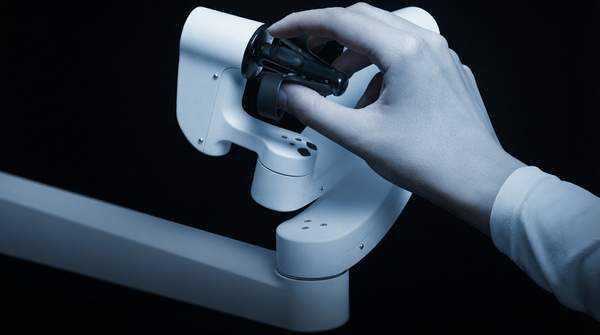
Why Surgical Robots Still Struggle to Give Surgeons a Sense of Touch
Haptic feedback, restoring the sense of touch to surgeons operating robotic systems, remains largely absent from commercial platforms due to complex engineering challenges. Replicating this crucial sense involves overcoming hurdles in sensor design, system integration, and human perception to enhance surgical precision and patient safety.
Oct 25, 2026 · 5 min read
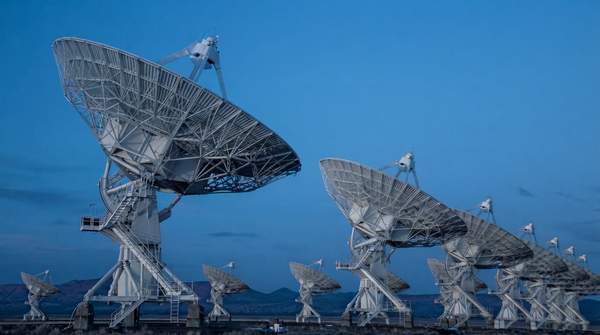
Fast Radio Bursts: Why a Distant Flash of Radio Waves Points to Magnetars
A recent James Webb Space Telescope observation of the most distant Fast Radio Burst (FRB) to date has provided strong evidence favoring the magnetar model for its origin. The host galaxy's youth and active star formation align with the expected environment for magnetars, while contradicting the long delay required for neutron star mergers.
Oct 24, 2026 · 5 min read