
Jwst
4 articles
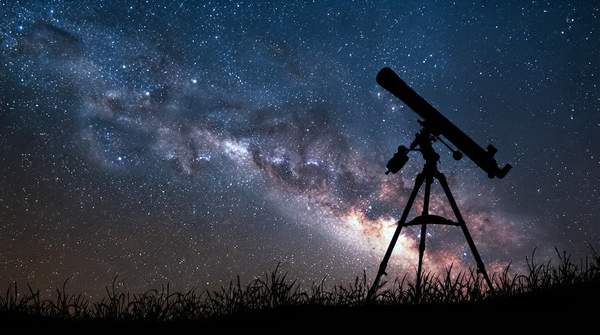
Why Finding Alien Life Requires Telescopes on Earth and in Space
Detecting alien life hinges on analyzing exoplanet atmospheres using spectroscopy, a task requiring a complementary approach from both space-based telescopes like JWST and powerful ground-based ELTs. While JWST excels at identifying molecules like CO2 and water, ELTs are crucial for the high-resolution search for oxygen, a key biosignature.
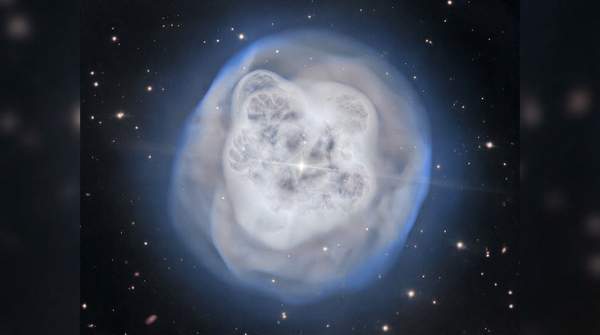
MEGATRON Simulations Bridge Early Universe Views, Connecting JWST to Ancient Stars
New MEGATRON simulations create a crucial link between JWST observations of young galaxies and chemical clues from ancient stars, offering a unified view of early cosmic evolution. This advanced modeling reconciles disparate observational data, enhancing our understanding of the universe's first stars and galaxies.

JWST Spots Bright New Black Hole in Early Universe
Just 660 million years after the Big Bang, a newly discovered object, MoM-BH*-1, is producing roughly 100 billion times more energy than any known star could physically generate, according to ScienceD

JWST Deep Field Observations Challenge Early Universe Galaxy Formation Theories
Recent JWST deep field observations reveal that galaxies formed stars much faster and were more chemically mature than previously theorized, challenging existing models of early universe evolution and prompting a re-evaluation of the cosmic timeline.