Building large-scale, useful quantum computers is not simply a matter of adding more quantum bits, or qubits. The primary obstacle is a fundamental battle against errors. The very quantum properties that give these machines their power also make them incredibly fragile. To achieve reliable, or "fault-tolerant," quantum computation, researchers must overcome persistent errors caused by environmental interference and the interactions between qubits themselves. The leading strategy, known as quantum error correction, addresses this fragility but introduces its own staggering challenge: a massive overhead in physical resources, requiring potentially thousands of physical qubits to create a single, stable computational one.
The Fragile Nature of Qubits: Decoherence and High Error Rates
The core components of a quantum computer, qubits, rely on delicate quantum states like superposition and entanglement to perform calculations. However, these states are extremely vulnerable to their surroundings. Even minute disturbances from the environment, collectively known as quantum noise, can cause a qubit to lose its quantum information in a process called decoherence. This loss disrupts the superposition and entanglement essential for quantum algorithms, leading to high rates of computational errors that can render a calculation useless.
This sensitivity presents a significant hurdle for developing scalable quantum computers. According to a 2023 article in a peer-reviewed journal, decoherence threatens the very foundation of quantum systems and restricts the practical use of complex algorithms. The challenge is to perform quantum operations much faster than decoherence can corrupt the qubits. This constant race against environmental noise is a primary reason why current quantum processors are limited in their capabilities and why achieving fault-tolerance is a paramount goal for the field.
Inter-Qubit Interference: The Challenge of Crosstalk
Beyond environmental noise, another major source of error emerges as researchers try to scale up quantum processors by packing more qubits together. This challenge is known as crosstalk. An operation intended for one specific qubit can inadvertently disturb its neighbors, introducing additional errors into the computation. This unwanted interaction complicates the precise control needed for reliable calculations.
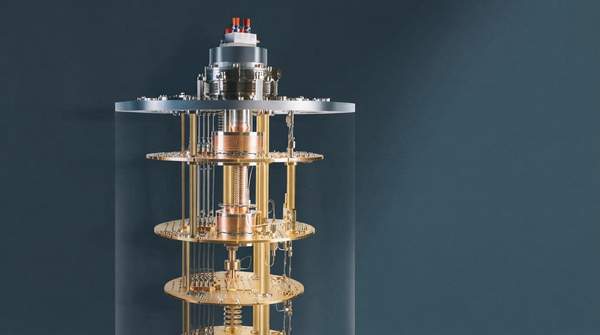
As described by The Quantum Insider, increasing the physical distance between qubits can reduce crosstalk, but this solution creates new engineering problems. A more spread-out design makes the overall system larger, which in turn adds to the immense challenges of wiring, control, and cooling the quantum processor. Researchers face a difficult trade-off: increasing qubit density to boost computational power also increases the risk of crosstalk, which can raise the error rate. This interplay highlights how solving one scaling problem can introduce or worsen another, complicating the path from today's processors with hundreds of qubits to the millions required for fault-tolerant systems.
Quantum Error Correction: The Strategy for Reliability
Given that physical errors from decoherence and crosstalk are unavoidable, researchers have developed a strategy to manage them: quantum error correction (QEC). Unlike classical computers where information can be copied to create redundancy, the laws of quantum mechanics forbid copying an unknown quantum state. Instead, QEC works by distributing the information of a single, ideal "logical qubit" across many interconnected physical qubits.
This encoding allows the system to detect and correct errors that occur on the individual physical qubits without directly measuring—and thus destroying—the delicate quantum information stored in the logical qubit. According to Microsoft's quantum computing resources, these techniques enable the construction of logical qubits that are more robust than their physical components. By reducing the impact of errors on the overall computation, QEC makes it possible to scale up quantum computers toward fault-tolerance. This approach is considered one of the most promising for building large-scale quantum machines capable of solving practical problems.
Quantum Scaling Challenges and Error Correction Model
To build a reliable quantum computer, layers of engineering and physics must work together to overcome fundamental sources of error. The primary strategy, quantum error correction, addresses these physical limitations but imposes significant resource costs, as illustrated in the model below.
| Source of Error | Physical Effect | Mitigation Strategy | Resource Cost |
|---|---|---|---|
| Decoherence | Environmental noise (e.g., temperature fluctuations, electromagnetic fields) causes qubits to lose their quantum properties, corrupting the information they hold. This is a primary driver of high error rates. | Quantum Error Correction (QEC) encodes information non-locally across many physical qubits, making it resilient to localized errors on any single qubit. | Requires a large number of physical qubits to form one logical qubit. The QEC cycle must also operate faster than the decoherence time. |
| Crosstalk | As qubit density increases, operations on one qubit can unintentionally affect its neighbors, introducing correlated errors that are difficult to correct. | QEC codes, such as the surface code, are designed with specific layouts (e.g., a 2D grid) that can identify and correct for errors affecting neighboring qubits. | Increases the complexity of the physical device and the control systems. The overhead of QEC may increase to compensate for higher error rates from crosstalk. |
| Gate Errors | The physical operations (or "gates") used to manipulate qubits are imperfect and can introduce errors into the computation. | Fault-tolerant protocols use QEC to continuously check for and correct errors introduced by imperfect gates, ensuring the logical computation remains accurate. | A large overhead of physical qubits is needed to create a logical qubit with an error rate significantly lower than the physical gate error rate. |
The Surface Code: Illustrating the Qubit Overhead
One of the most prominent QEC techniques is the surface code. In a 2023 announcement, Google's Quantum AI team reported progress in using the surface code to suppress quantum errors by scaling up a logical qubit. The core idea is that as you add more physical qubits to the code in a specific two-dimensional grid, the resulting logical qubit becomes exponentially better at resisting errors. This is a critical milestone, as it demonstrates a path toward reducing error rates to levels required for useful computation.
However, this error suppression comes at a steep price in the number of physical qubits required. The overhead is immense. In a 2024 paper published in Nature, researchers extrapolated from their experimental results that achieving a target logical error rate of one in a million (10⁻⁶) would require a surface code logical qubit built from 1,457 physical qubits. This figure starkly illustrates the scale of the challenge: building a quantum computer with just a few hundred stable logical qubits could demand hundreds of thousands, or even millions, of physical qubits, along with the complex systems needed to control and cool them.
The Path to Practical Fault-Tolerant Quantum Computing
The journey toward building a quantum computer capable of solving large-scale problems is fundamentally a quest for fault-tolerance. This requires overcoming the inherent fragility of qubits through the sophisticated, but resource-intensive, framework of quantum error correction. The challenges of decoherence, crosstalk, and gate errors mean that simply increasing the number of physical qubits is not enough; the quality and control of those qubits must also improve dramatically to make error correction feasible.
Based on the progress reported by research groups like Google Quantum AI, the path forward is clear. Researchers must continue to improve physical qubit quality and scale quantum error correction implementations to reduce the physical qubit overhead per logical qubit. The key benchmark for progress will be demonstrations of logical qubits with error rates below the physical qubit error rates, and a decreasing ratio of physical to logical qubits required for a given computational task. Achieving these milestones will mark significant steps toward the era of fault-tolerant quantum computing.