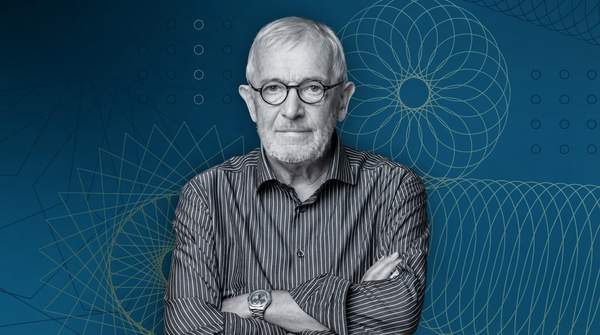
The Royal Swedish Academy of Sciences awarded the 2026 Nobel Prize in Physics on Tuesday to Francis Halzen for his visionary work that transformed a cubic kilometer of Antarctic ice into a revolutionary telescope, leading to the discovery of high-energy neutrinos from deep space. The prize recognizes Halzen’s "decisive contributions to the IceCube Neutrino Observatory," an instrument that has opened an entirely new way to view the universe by capturing its most elusive particles.
Halzen, a professor at the University of Wisconsin–Madison, pioneered the audacious concept of using the pristine, deep ice at the South Pole to detect neutrinos, nearly massless subatomic particles that travel unimpeded from the most violent cosmic events. His leadership was fundamental to the creation and success of IceCube, which has captured these "ghost particles" from distant, energy-rich sources and effectively founded the new field of neutrino astronomy.
Speaking to the Nobel committee after the announcement, Halzen expressed his shock. "It was a great surprise and I obviously didn't expect it," he said. Mark Pearce, Chair of the Nobel Committee for Physics, lauded the achievement, stating that Halzen's "tenacity and scientific vision has paved the way for a new kind of astronomy."