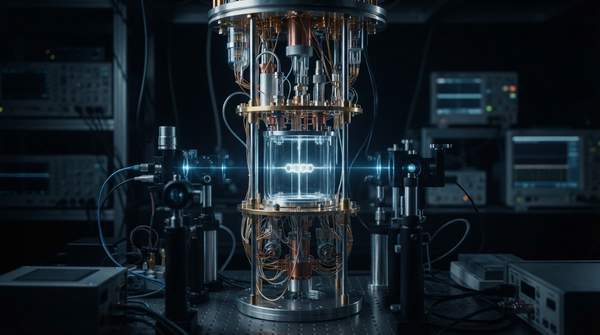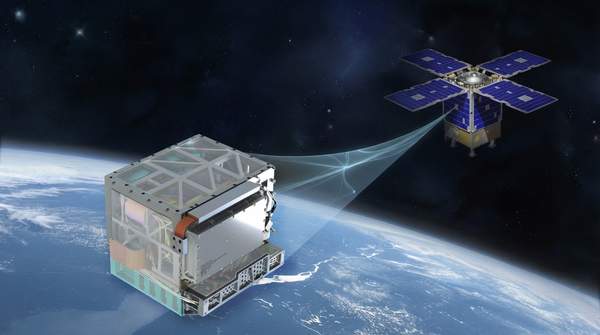
Could time itself be quantum? A team of physicists has proposed a way to find out: put an advanced atomic clock into a quantum superposition and look for signs that it experiences two different rates of time simultaneously. The proposal, described in a study published in Physical Review Letters, remains theoretical. No one has yet watched time behave as a quantum object. But the researchers calculate that a technique for controlling the clock's motion could make the predicted signal 100 to 1,000 times easier to detect, potentially bringing it within reach of current equipment. Here is why physicists think time might go quantum, and how they plan to test it.
The Fundamental Conflict: Time in Relativity vs. Quantum Mechanics
Why is time a problem at all? Einstein's theory of relativity says time is not fixed. It passes at different rates depending on how fast something is moving and the strength of the gravity it experiences. Quantum mechanics, by contrast, has largely treated time as a fixed backdrop against which quantum events unfold. "Time plays very different roles in quantum theory and in relativity," says the physicist Pikovski, whose team has been exploring whether time itself can follow quantum rules rather than remaining a fixed stage.
This tension matters because past experiments never truly tested it. As the physicists Nick Huggett and Carlo Rovelli have explained, even landmark experiments in which neutrons behaved quantum mechanically in Earth's gravitational field left gravity itself classical, described by general relativity. The new generation of proposals aims to go further: to demonstrate for the first time that gravity, like neutrons and light, has a quantum nature. According to general relativity, every object affects spacetime curvature. So what happens if a small object sits in a quantum superposition of two locations?
The Quantum Hypothesis: A Superposition of Time
Combine the two theories and something strange emerges. Quantum mechanics allows a particle, or a whole clock, to exist in a superposition of different possible states. Relativity says each of those states can correspond to a different rate of time. If a clock's motion is in superposition, the proposal reasons, then the time it measures could also exist in multiple states at once.
The analogy is familiar: Schrödinger's cat, both alive and dead until observed. In this case, time itself would exist in overlapping states, as if a clock were both younger and older at the same moment. It is a theoretical prediction, derived from the interplay of the two frameworks rather than from any observation. That is precisely why the researchers behind it want an experiment: a prediction this odd needs to be tested, not assumed.