Quantum annealing solves optimization problems by letting a quantum system settle into its lowest-energy state, using quantum tunneling to pass through energy barriers that would trap a classical optimizer climbing over them. That single mechanism — tunneling rather than climbing — is what separates it from classical simulated annealing, while its specialized, optimization-only scope is what separates it from general-purpose gate-based quantum computers. Here is how the mechanism works, where it is being applied today, and what its current limitations mean in practice.
Understanding Quantum Annealing's Core Mechanism
Quantum annealing is a quantum optimization approach designed for problems where you must find the best option among a vast number of choices — tasks that classical computers often struggle to handle efficiently, as Michael Tsesmelis describes in a 2026 Springer chapter on the topic. The trick is to encode your problem into a physical system whose energy depends on the configuration of that problem. The best solution then corresponds to the system's lowest-energy state, its ground state.
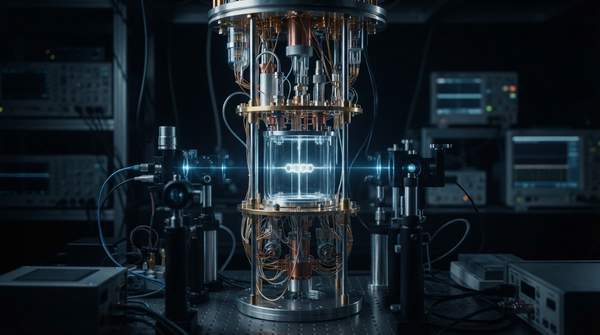
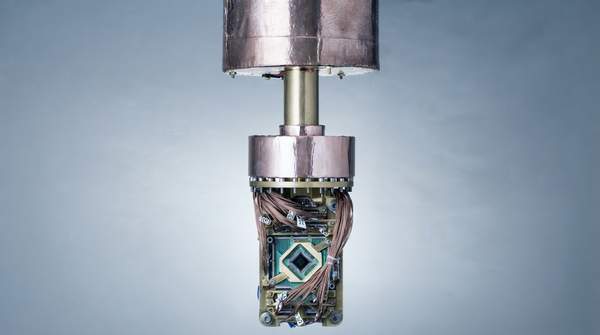
The hardware that carries this out, the quantum processing unit, operates on principles derived from adiabatic quantum computing, according to Tsesmelis. In essence, the system starts in an easy-to-prepare low-energy state, and the problem is slowly introduced so the system is guided toward the ground state of the problem you actually care about. D-Wave, a leading annealing hardware provider, describes the process as guiding a quantum system toward the lowest-energy configuration, which corresponds to an optimal or near-optimal solution among many possibilities.
Why does this work at all? Because the physics does the searching. Instead of testing candidate solutions one by one, the quantum system explores the energy landscape of the problem, and quantum effects such as tunneling and quantum fluctuations let it reach low-energy states that a step-by-step search might miss.