The world's oceans are undergoing a fundamental chemical change due to the absorption of atmospheric carbon dioxide (CO₂), a process known as ocean acidification. This phenomenon leads to a decrease in seawater pH and a reduction in the availability of carbonate ions, which are vital building blocks for many marine organisms. The consequences extend from the microscopic level, affecting the ability of shell-forming creatures to survive, to broader disruptions in marine food webs and the overall resilience of ocean ecosystems.
The Chemistry of Ocean Acidification: How CO2 Lowers Ocean pH
Ocean acidification begins with the ocean's absorption of carbon dioxide from the atmosphere. The Intergovernmental Oceanographic Commission of UNESCO notes that oceans absorb approximately 30% of the CO₂ released annually by human activities. While this uptake helps to slow climate change, it fundamentally alters seawater chemistry.
When CO₂ dissolves in seawater, it initiates a series of chemical reactions. The U.S. Environmental Protection Agency (EPA) explains that CO₂ reacts with water to form carbonic acid (H₂CO₃). This carbonic acid then dissociates into bicarbonate (HCO₃⁻) and hydrogen ions (H⁺), as detailed by AquaPublisher. The increase in hydrogen ions directly lowers the pH of seawater, making it more acidic.
Crucially, this increase in hydrogen ions also reduces the concentration of carbonate ions (CO₃²⁻). Carbonate ions are essential for marine organisms that build shells and skeletons, as they combine with calcium to form calcium carbonate (CaCO₃). As NOAA explains, when excess hydrogen ions bond with available carbonate, fewer carbonate ions remain for calcifying organisms to construct and maintain their structures. This reduction in carbonate ions directly hinders the ability of these organisms to build and maintain their shells and skeletons. If the pH drops too low, existing shells and skeletons can even begin to dissolve.Impacts on Calcifying Organisms: Shells and Skeletons Under Threat
The reduction in carbonate ions poses a severe threat to marine life that relies on calcium carbonate for their shells and skeletons. These "calcifying organisms" include corals, mollusks, and certain plankton species, which are particularly vulnerable to the chemical changes in seawater, according to the Intergovernmental Oceanographic Commission of UNESCO.
For instance, corals, which build complex reef structures, experience decreased calcification rates in more acidic waters, leading to slower growth and weaker reef structures, as studies cited by AquaPublisher indicate. The U.S. Environmental Protection Agency (EPA) also highlights that organisms like clams, oysters, scallops, mussels, starfish, and sea urchins are harmed because they depend on carbonate-based shells and skeletons. Mollusks, such as oysters and mussels, show impaired shell formation, which can reduce their survival and reproductive success, AquaPublisher reports.
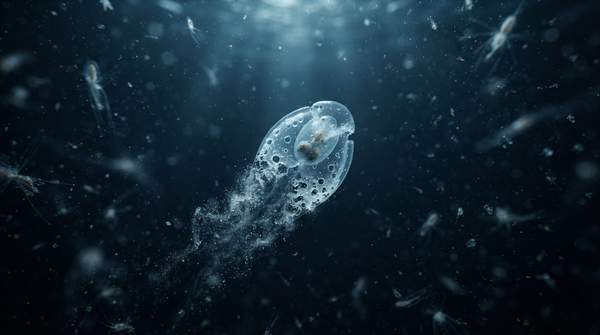
One particularly stark example involves pteropods, often called "sea butterflies," which are tiny sea snails. NOAA notes that pteropods are a vital part of many marine food webs. When pteropod shells were placed in seawater with pH and carbonate levels projected for the year 2100, the shells slowly dissolved over 45 days. Researchers have already observed severe levels of pteropod shell dissolution in the Southern Ocean, which encircles Antarctica. The Natural History Museum further explains that animals like corals, sea urchins, sea snails, and oysters must expend extra energy to repair or thicken their damaged shells and exoskeletons. This diversion of energy from essential functions can negatively affect their ability to grow and reproduce. Even single-celled organisms like foraminifera struggle to build their shells in more acidic waters, producing thinner structures, according to the Natural History Museum.Behavioral and Physiological Changes in Fish
Ocean acidification's effects are not limited to calcifying organisms; changes in ocean chemistry can also impact the behavior and physiology of non-calcifying marine life, including fish.
The U.S. Environmental Protection Agency (EPA) points out that fish larvae can lose their ability to smell and avoid predators in more acidic conditions. NOAA also reports that the ability of some fish, such as clownfish, to detect predators is decreased in more acidic waters. These behavioral alterations can have significant implications for their survival and interactions within their ecosystems. For example, impaired predator detection can lead to increased mortality rates, disrupting population dynamics.
Beyond direct behavioral changes, organisms may also face physiological stress. The EPA notes that animals like sea urchins must spend more energy to build and maintain their shells under increasing acidity, which could impair their overall health. This diversion of energy from essential functions like growth and reproduction can weaken individual organisms, making them more susceptible to other environmental stressors and reducing their overall fitness within the ecosystem. AquaPublisher also highlights that ocean acidification has profound effects on marine organisms, impacting their physiology, behavior, and ecological interactions.
Cascading Effects on Marine Food Webs and Ecosystem Resilience
The impacts of ocean acidification on individual organisms, particularly calcifiers and fish, can cascade through marine food webs, affecting ecosystem structure and overall resilience.
The U.S. Environmental Protection Agency (EPA) suggests that organisms higher up the food chain that feed on sensitive species will also be harmed, though the exact ecosystem impacts are still being studied. The Natural History Museum explains that even if some animals survive in more acidic waters, they may become smaller. This reduction in size can have "knock-on effects" for other animals that rely on them for food, including whales and even humans, by reducing the available biomass at lower trophic levels.
Pteropods, for example, are a critical food source for a wide range of marine organisms, from tiny krill to whales, as NOAA highlights. The dissolution of their shells, already observed in some regions, threatens this foundational link in many food webs. NOAA Fisheries further emphasizes that pteropods are tiny snails eaten by numerous species, including fish and whales, making their decline a significant concern for the stability of these food sources.
Coral reefs, which are themselves vulnerable to acidification, provide essential habitat for fish and other marine life. NOAA Fisheries reports that ocean acidification is weakening coral structures in the Caribbean and cold-water reefs off Scotland and Norway, and is a concern for the Great Barrier Reef, where living corals have declined by half over the past three decades. This reduction in habitat directly impacts fish populations and reduces the resilience of the entire reef system. The Intergovernmental Oceanographic Commission of UNESCO anticipates declines in reef complexity and a shift towards algae-dominated ecosystems, which would compound the effects of ocean warming and marine heatwaves. AquaPublisher also notes that potential declines in calcifying species populations could disrupt marine food webs and ecosystem services, such as coastal protection and biodiversity.
The degradation of these foundational species and habitats undermines the stability of marine ecosystems, threatening seafood security for communities reliant on marine resources, as the Intergovernmental Oceanographic Commission of UNESCO points out. While the precise long-term cascade effects are complex and continue to be monitored, the documented impacts on key species suggest widespread ecological consequences that can alter the structure and functionality of marine environments globally.