A failed rift is a place where a continent began to tear itself apart but stopped short of a complete breakup: the crust stretched and thinned, volcanoes sometimes erupted, and then the whole system went dormant, leaving a buried scar inside the land. That definition, simple enough on its own, conceals a lively scientific debate about what these ancient structures become over millions of years. The same failed rift can persist as a hidden line of weakness that later tectonic forces reopen—as one is apparently doing right now beneath Botswana—or, counterintuitively, end up strengthening the plate it once threatened to split.
What is Continental Rifting?
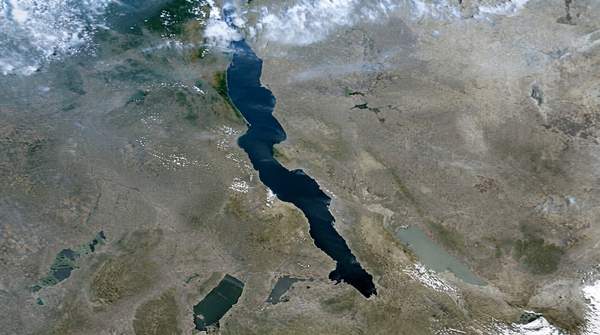
Continental rifting is the opening act of plate tectonics' most dramatic production: the splitting of a continent. The U.S. National Park Service describes it as a process that occurs at divergent plate boundaries, where the stretching and thinning of continental crust allow the land to pull apart. Fault-bounded valleys form, volcanism can accompany the stretching, and sediments pour into the sinking basins between the slipping crustal blocks. The East African Rift, where the continent is visibly pulling apart today, is the textbook example of the process in action.
The stakes of this stretching are enormous. If it continues far enough, continental crust thins to nothing and seafloor spreading takes over, manufacturing new oceanic crust and birthing a new ocean basin—an event that redraws the map of the planet. But rifting does not always run to completion. The forces driving the stretch can dwindle, shift direction, or simply lose their contest with the strength of the rock. Geologists, writing in the Geological Society of America's professional literature on North American rifts, acknowledge plainly that it remains unclear why some rifts fail. What is clear is that the failures are common—and, in a paradox that researchers are still untangling, that they matter long after the stretching stops.