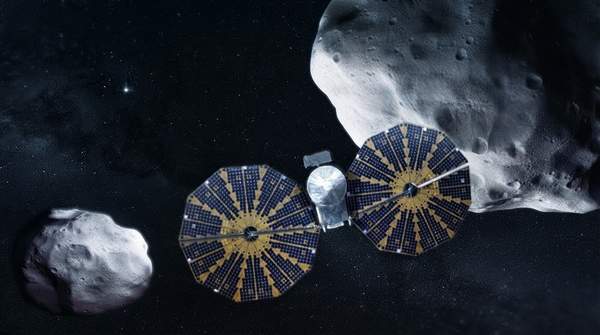
What can a fistful of asteroid dust tell us that a telescope cannot? Quite a lot, it turns out. The central lesson from a decade of sample return missions is that the true composition of an asteroid can only be confirmed by physically returning its material to Earth, according to analyses from the Hayabusa, Hayabusa2, and OSIRIS-REx missions. Spacecraft instruments and Earth-found meteorites each carry fundamental limitations, and laboratory work on pristine, uncontaminated samples remains the only way to fully probe how an asteroid formed and evolved.
Why Bring Space Rocks Home? The Unique Value of Sample Return Missions
Sample return missions are expensive and technologically demanding. So why do space agencies keep building them? The answer, as planetary scientist Helena Bates argues in Nature Communications, is that studying asteroids addresses "possibly the broadest number of unknowns in planetary science," spanning astrobiology, Solar System dynamics, terrestrial planet formation, and planetary defense.
Jemma Davidson and Jessica Barnes, writing in Eos, put the case plainly: returned samples allow us "to answer long-standing questions about the geological and chemical histories of varied celestial bodies," offer "insights into the habitability of planetary bodies," and help us understand how Earth became the only apparent life-supporting body in our solar system. The detail achievable with sophisticated laboratory instrumentation on Earth "is simply not possible in space."
There is also a long-game advantage. As a recent review in the journal Astrobiology notes, some Apollo lunar material has been stored in pristine conditions since 1973, deliberately preserved to "wait" for analytical techniques that did not yet exist. Returned samples can be archived for instruments that have not been invented yet.
Comparing Asteroid Study Methods: Why Sample Return Excels
Scientists have three ways to study asteroid material, and each carries distinct trade-offs. The table below contrasts them across the dimensions that matter most: how pristine the material is, whether its geological context is known, and what analyses are possible.
| Dimension | Meteorite Analysis | Remote Observation (Flyby/Orbiter) | Sample Return Laboratory Analysis |
|---|---|---|---|
| Sample pristineness | Quickly contaminated by Earth entry, weathering, and even laboratory preparation | No physical sample; instruments measure from a distance | Preserved in pristine conditions, uncontaminated |
| Geological context | Unknown; hard to match material to specific asteroid types | Site context known from imaging, but no material | Known collection site on the body itself |
| Range of analyses | Full laboratory techniques, but on altered material | Limited to instruments carried on the spacecraft | Full range of Earth-based laboratory instruments |
The verdict the comparison supports: certain high-stakes questions—confirming true asteroid composition beneath space weathering, definitively dating material, and identifying fragile prebiotic organic molecules—can only be answered with returned samples. Meteorites suffer from rapid terrestrial contamination, including contaminants introduced during cutting and polishing in the lab, which can lead to incorrect characterization of whether detected minerals are original or introduced. Remote sensing, meanwhile, is capped by whatever instruments the spacecraft carries.