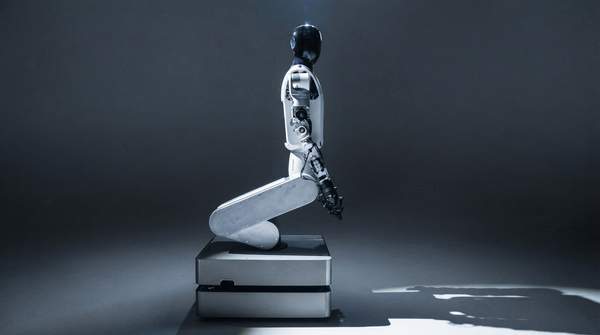
Humanoid robots are being tested in real industrial settings, but they are not yet ready for widespread deployment. Analysts at Gartner assess that the technology remains immature and that fewer than 100 companies will advance humanoids beyond proof-of-concept trials, with deployments limited to controlled environments rather than demanding supply chain operations. The gap between vision and factory floor comes down to unsolved engineering problems at the component level and unresolved economics.
The Vision: Why Humanoid Robots for Industry?
Why build robots shaped like people at all? The answer is adaptability. Conventional industrial robots are programmed to repeat fixed movements; humanoids are meant to work in environments built for humans. Genesis AI, a robotics start-up that raised $500 million at a $3.5 billion valuation, is pursuing machines capable of adapting to unfamiliar environments, manipulating different objects and learning new tasks — what its co-founder and CEO Zhou Xian describes as "the world's best general-purpose robot, one that works reliably in the real world, day after day."
The commercial motivation is labor. Manufacturers facing labor shortages, skills gaps and pressure for supply chain efficiency are looking for robot helpers, and humanoid form factors promise to slot into existing workflows without costly facility redesign. That is the aspirational pitch: a flexible machine that fills gaps where human workers are scarce.