Epigenetic inheritance is the transmission of changes in gene expression from one generation to the next without any change to the DNA sequence itself. Instead of altering the genetic code, environmental factors such as diet, toxic pollutants, and temperature stress leave molecular marks on or around the DNA that can silence or activate genes, and some of those marks survive reproduction. The three mechanisms most often implicated are DNA methylation, histone modification, and non-coding RNAs. Documented studies, from fungicide-exposed rats to heat-stressed plants, show that these marks can carry the memory of an ancestor's environment into descendants who never experienced it.
What is Epigenetic Inheritance?
For decades, biologists assumed that a new embryo's epigenome was wiped clean and rebuilt from scratch. That assumption turned out to be incomplete. As the University of Utah's genetics education program explains, some epigenetic tags remain in place as genetic information passes from parent to offspring, a process called epigenetic inheritance. It is an unconventional finding because it contradicts the idea that inheritance happens only through the DNA code.
The distinction from genetic inheritance is fundamental. Genetic inheritance involves changes to the DNA sequence itself; epigenetic inheritance involves molecular factors around the DNA that regulate genome activity independent of that sequence and that remain stable through cell division. A scientific review of vinclozolin studies defines epigenetics precisely this way: molecular factors and processes around DNA that regulate genomic activity independent of DNA sequence and are mitotically stable. In other words, the letters of the genome stay the same, but the instructions about which genes to read change.
Epigenetic transgenerational inheritance is the strictest form of the phenomenon. As researchers studying the fungicide vinclozolin describe it, it involves germline transmission of epigenetic information and phenotypic change across generations in the absence of any continued direct environmental exposure or genetic manipulation. That last condition matters: if a descendant was never exposed to the trigger, yet still shows the effect, the mark must have traveled through the reproductive cells.
DNA Methylation: Silencing Genes
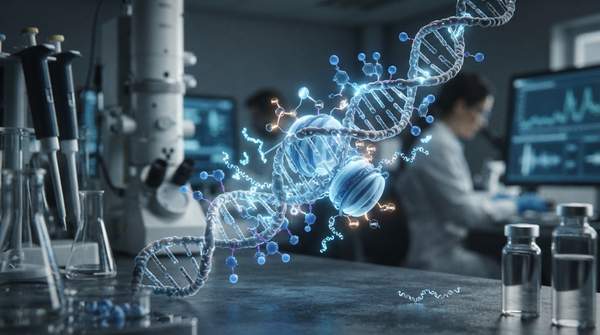
DNA methylation is the most heavily studied of the three mechanisms and, according to the vinclozolin research, the primary epigenetic mechanism previously shown to mediate generational inheritance through the male germ line. In this process, small chemical tags called methyl groups attach directly to the DNA, typically at specific sites, and repress gene transcription. A methylated gene is not deleted or mutated; it is simply switched off or dialed down, because the methylation pattern blocks the machinery that would otherwise read it.
What makes methylation central to inheritance is its durability. Once established, methylation patterns are copied when cells divide, which allows a gene-silencing decision made in one cell to persist in its descendants. The same stability is what allows methylation marks programmed in sperm or egg cells to be carried into an organism that was never itself exposed to the original environmental trigger. The vinclozolin studies focus on DNA methylation precisely because it is the mechanism shown to mediate this generational transmission through the male germline.
Histone Modification: Altering Chromatin Structure
The second mechanism works not on the DNA directly but on the protein spools it wraps around. Inside a cell, DNA coils around proteins called histones, forming a compact structure known as chromatin. How tightly the DNA is wound determines whether genes are accessible: loosely packaged regions can be read and expressed, while tightly packaged regions are effectively closed for business. Chemical modifications to histones, such as the addition or removal of small chemical groups, change how tightly the chromatin is packed.
These chromatin structure changes are listed among the core epigenetic processes in the scientific reviews of transgenerational inheritance. A gene sitting in a densely packed chromatin region may be silent even though its sequence is perfectly intact, and a gene in an open region may be actively expressed. Like methylation, histone modifications regulate genomic activity independent of DNA sequence, which is exactly the property epigenetic inheritance requires: heritable control over gene expression without rewriting the code.
Non-coding RNAs: Regulatory Molecules
The third mechanism involves RNA molecules that do not code for proteins. Non-coding RNAs, including microRNAs, are functional molecules that modulate gene expression rather than serving as blueprints for building proteins. They can interfere with gene expression at various stages, for example by binding to messenger RNA and preventing it from being translated, or by helping recruit the machinery that silences genes through methylation or chromatin changes.
Scientific reviews of epigenetic inheritance list non-coding RNA alongside DNA methylation, histone modifications, and chromatin structure as epigenetic factors that regulate genome activity independent of DNA sequence. In the context of inheritance, non-coding RNAs matter because they can be packaged into reproductive cells and can help establish or maintain the other epigenetic marks in a developing embryo. Together, the three mechanisms form a layered system of control: methylation marks the DNA, histone modifications shape its packaging, and non-coding RNAs help regulate and coordinate gene activity.
Comparative Examples of Epigenetic Inheritance
The clearest way to see these mechanisms at work is to trace the causal chain from an environmental trigger, through a molecular change, to an outcome in descendants. The table below compares two documented cases, one in a mammal and one in a plant, mapping each step of that chain.
| Environmental Factor | Organism | Epigenetic Mechanism | Observed Transgenerational Effect |
|---|---|---|---|
| Exposure to the fungicide vinclozolin during gestation of the F0 generation female | Rats (F1, F2, and F3 generations evaluated) | Non-mutational changes to DNA in the germline, including DNA methylation reprogramming of the male germ line | Adult-onset diseases and pathologies in F1, F2, and F3 generations, with F3 abnormalities arising without any direct toxicant exposure |
| Temperature stress | Arabidopsis thaliana, a mustard family plant and model system for studying epigenetic inheritance | Changes in DNA methylation patterns at the flowering time gene locus | Transgenerational memory of stress, inherited across multiple generations and influencing how offspring respond to future stress |
The vinclozolin case illustrates the logic of transgenerational inheritance especially well. In the rat study, pregnant F0 generation females were exposed to vinclozolin, and the subsequent F1, F2, and F3 generations were evaluated for disease. The researchers explain why the F3 generation is the decisive one: F1 adults and their sperm were directly exposed, and F2 animals derived from directly exposed sperm and eggs, so their abnormalities reflect a combination of direct toxicity and generational transmission. The F3 generation, by contrast, had no direct toxicant exposure, meaning any abnormalities in that lineage are the result of germline transmission of epigenetic alterations.
Michael Skinner, the Washington State University researcher who helped identify epigenetic inheritance of disease risk two decades ago, describes the mechanism plainly: when a gestating female is exposed, the fetus is exposed, and the germline inside the fetus is exposed too. "Once it's programmed in the germline, it's as stable as a genetic mutation," he says. Reporting by ScienceAlert notes that Skinner and colleagues monitored rats for 10 generations after a single vinclozolin exposure, and that inherited disease risk can eclipse the threat posed by direct exposure itself.
The plant case shows the same principle in a different kingdom. Research in Arabidopsis thaliana determined that temperature stress can lead to changes in DNA methylation patterns at the flowering time gene locus, which are subsequently inherited across multiple generations. The review presenting this work cautions that such model studies do not perfectly recapitulate human epigenetic mechanisms, but they offer support for epigenetic transfer across generations and evidence that harmful environmental exposures induce epigenetic modifications inherited into future generations.
Understanding the Enduring Impact of Environment on Inheritance
For the reader, the practical takeaway is to recognize that environmental exposures can program stable, heritable changes in gene expression across generations without altering DNA sequence. This is not speculation but a documented outcome of peer-reviewed studies in rats and plants, and it reframes environmental health as a matter affecting not only the current population but future generations that will experience health outcomes transmitted through epigenetic inheritance.
The measurable indicator to watch is the presence of specific epigenetic marks, such as DNA methylation patterns, in the germline of offspring, correlating with observed phenotypic changes in subsequent generations even in the absence of direct exposure. That correlation, demonstrated in the F3 vinclozolin lineage and in the inherited methylation changes at the Arabidopsis flowering time gene, is the signature that distinguishes genuine transgenerational epigenetic inheritance from ordinary direct toxicity. Two boundaries remain: these findings come largely from model organisms and may not translate directly to humans, and this article covers the three most commonly cited mechanisms, not all known epigenetic processes.
Sources
- Vinclozolin induced epigenetic transgenerational inheritance of pathologies and sperm epimutation biomarkers for… — PMC
- Epigenetics & Inheritance — LEARN
- Epigenetic Transgenerational Inheritance of Vinclozolin Induced Mouse Adult Onset Disease and Associated… — PMC
- Environmental exposures influence multigenerational epigenetic transmission - PMC
- One exposure. Twenty generations later, the damage is still unfolding. — U.S. Right to Know
- Pesticide Exposure Could Increase Disease Risk For The Next 20 Generations — ScienceAlert