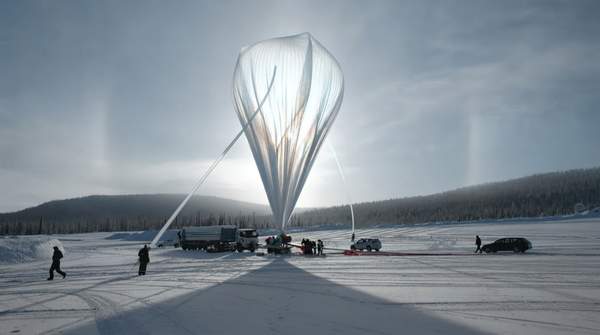
Geoengineering is the deliberate, large-scale intervention in the Earth's climate system to temper the harms of greenhouse gas emissions, and it splits into two fundamentally different families of approaches. One, Solar Radiation Management (SRM), works by reflecting a portion of sunlight back to space to cool the planet. The other, Carbon Dioxide Removal (CDR), works by pulling carbon dioxide out of the atmosphere. The U.S. Environmental Protection Agency frames this distinction as the organizing structure of the field, and it matters because the two categories carry entirely different mechanisms, timescales, and risks.
What is Geoengineering?
According to the EPA, geoengineering encompasses both the removal of carbon dioxide from the atmosphere and the intentional modification of sunlight reaching Earth's surface. The Grantham Research Institute at the London School of Economics describes the underlying idea as deliberate manipulation of physical, chemical, or biological aspects of the Earth system with the intention of tempering the harmful effects of anthropogenic greenhouse gas emissions.
The two categories differ in a basic way. SRM-type interventions treat a symptom—excess heat—by deflecting sunlight before it is absorbed, while CDR addresses the cause by reducing the concentration of CO2 already in the air. Yale economist Kelly Shue, writing about climate intervention, notes that geoengineering is being discussed as one potential way to keep the harms of climate change at bay as the world moves toward surpassing the 1.5 degrees Celsius threshold above preindustrial averages. The Union of Concerned Scientists adds that researchers are examining solar geoengineering precisely because emissions cuts alone may not be enough to avoid substantial climate disruption.
Solar Radiation Management (SRM): Reflecting Sunlight
Solar Radiation Management aims to bring down temperatures by reflecting a small amount of sunlight back into space, limiting what reaches the Earth's surface. The EPA explains that most proposed techniques involve adding material to the atmosphere to increase the amount of incoming sunlight reflected away.
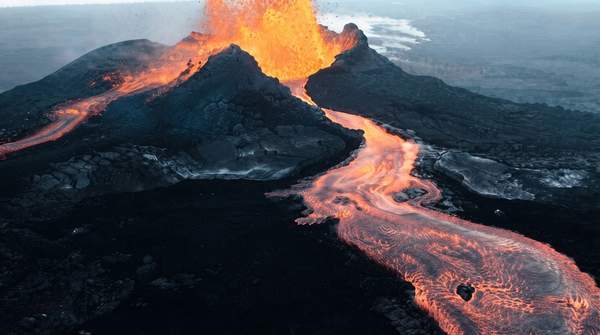
The most widely studied method is Stratospheric Aerosol Injection (SAI), which introduces sunlight-reflecting aerosols into the atmosphere to temporarily cool the planet. Although SRM has never been deployed, it mimics a natural process: the 1991 eruption of Mount Pinatubo is believed to have cooled the planet by roughly 0.5 degrees Celsius over the following two years because of the sulfur dioxide it released. The Union of Concerned Scientists identifies SAI and marine cloud brightening as the two main approaches being researched, and the organization opposes deployment because it poses what it calls unacceptably high environmental, social, and geopolitical risks.
Other techniques, such as cirrus cloud thinning and space-based methods, have been far less researched, the EPA notes, due to uncertainty in the processes, high potential costs, and more limited feasibility.
Carbon Dioxide Removal (CDR): Taking CO2 Out of the Atmosphere
Carbon Dioxide Removal focuses on actively extracting CO2 from the atmosphere. The EPA lists direct air capture and storage, ocean iron fertilization, and ocean alkalinity enhancement among the proposed methods. A report by Mohammed Al-Juaied and Adam Whitmore at Harvard's Belfer Center emphasizes that meeting international climate goals will likely require CDR as part of a wider program of action—but that the main priority must be reducing and eliminating emissions, since preventing greenhouse gases from entering the atmosphere is usually easier and less costly than removing them once there.
Direct Air Capture (DAC) operates on the principle of extracting atmospheric carbon dioxide to reuse it in other industries or sequester it underground, as described in a review of DAC technology published in the National Library of Medicine's repository. Commercial projects from companies such as Climeworks and Carbon Engineering rely on large fans to intake air before capture and storage.
However, the Grantham Research Institute cautions that achieving CDR at a scale that would substantially contribute to mitigating climate change is a massive undertaking, and that the methods carry multiple negative side effects. Ocean fertilization, for instance, may have unwanted effects on ocean ecology, while biomass-based approaches would compete for land needed for food crops and nature conservation.
Geoengineering Methods: A Comparative Overview
The table below categorizes the most commonly discussed techniques under their primary approach and compares how each works against its most significant known risk or uncertainty. The central distinction it delivers: SRM methods reflect sunlight to cool the planet without addressing atmospheric CO2, while CDR methods remove CO2 itself, each carrying distinct and unresolved risks.
| Category | Method | Mechanism | Primary Risk / Uncertainty |
|---|---|---|---|
| Solar Radiation Management (SRM) | Stratospheric Aerosol Injection (SAI) | Introduces sunlight-reflecting aerosols into the stratosphere to cool the planet, mimicking volcanic processes such as Pinatubo in 1991 | Potential unintended health and environmental consequences; uncertain local impacts; significant governance challenges including possible unilateral action |
| Solar Radiation Management (SRM) | Marine Cloud Brightening (MCB) | Adds material to the atmosphere to increase sunlight reflected back to space | Poses environmental, social, and geopolitical risks, per the Union of Concerned Scientists, which opposes deployment |
| Carbon Dioxide Removal (CDR) | Direct Air Capture (DAC) | Extracts atmospheric CO2 for reuse in industry or for underground sequestration | Requires massive scale-up to matter; costs are a significant consideration; rated at a low Technological Readiness Level |
| Carbon Dioxide Removal (CDR) | Ocean Iron Fertilization | Adds iron to stimulate phytoplankton growth that absorbs CO2 | May have unwanted side effects on ocean ecology; full ecological impacts not understood |
One further contrast deserves emphasis. Harvard's Salata Institute notes that climate models have consistently shown solar geoengineering, used in moderation and combined with emissions cuts, could reduce climate impacts such as extreme temperatures, changes in water availability, and the intensity of tropical storms. But any benefits come with novel risks and significant uncertainty: global-scale modeling may show benefits while local impacts vary far more widely.
Cross-Cutting Risks, Uncertainties, and Governance Challenges
Beyond the method-specific risks in the table, several concerns cut across the entire field. The EPA states plainly that current understanding of solar geoengineering's risks and benefits is limited by uncertainties in the observations and modeling tools used to examine its impacts, and that depending on the approach, there could be additional unintended health and environmental consequences requiring careful evaluation.
The Salata Institute echoes this, pointing to scientific uncertainties that are not yet well understood and, notably, "the enormous governance challenges." Yale's Kelly Shue highlights the geopolitical dimension: because SRM technologies are relatively cheap compared with emissions reduction, a single country or even a wealthy individual could in principle deploy them unilaterally, raising the risk of international conflict.
On the CDR side, the Belfer Center report frames the challenge as one of scale and funding rather than physics: the priority remains reducing emissions, with removal as a complementary and difficult undertaking. The Union of Concerned Scientists' position on solar geoengineering deployment illustrates that these debates are not merely technical—they involve value judgments about acceptable risk that no climate model can settle.
Navigating the Future of Climate Intervention
Readers should approach discussions of geoengineering with an understanding of the distinct scientific mechanisms and significant uncertainties associated with each method, recognizing that these interventions are complex and carry cross-cutting risks. The essential distinction to hold onto is between methods that reflect sunlight—fast-acting but doing nothing about atmospheric CO2, and burdened with unresolved governance questions—and methods that remove CO2—addressing the root cause but requiring massive scale-up at costs that remain a significant consideration.
The measurable indicator of informed engagement is public and policy discussion that accurately differentiates between Solar Radiation Management and Carbon Dioxide Removal, acknowledging their specific risks and the need for robust governance frameworks. Neither category is a substitute for emissions cuts: the Belfer Center's authors state that preventing greenhouse gases from entering the atmosphere will usually be easier and less costly than removing them once they are there, and the Salata Institute's modeling shows solar geoengineering being considered only in moderation and combined with emissions reductions. That framing—intervention as a complement to, never a replacement for, cutting emissions—is the boundary every reader should carry into any geoengineering debate.
Sources
- About Geoengineering — US EPA
- What is geoengineering and how could it help tackle climate change? — Grantham Research Institute on climate change and the environment
- How Cooling the Planet with Geoengineering Would Upend Climate Economics — Yale Insights
- What is Solar Geoengineering? — Union of Concerned Scientists
- Prospects for Direct Air Carbon Capture and Storage: Costs, Scale, and Funding — The Belfer Center for Science and International Affairs
- Current status and pillars of direct air capture technologies - PMC
- The Harvard Solar Geoengineering Research Program - The Salata Institute