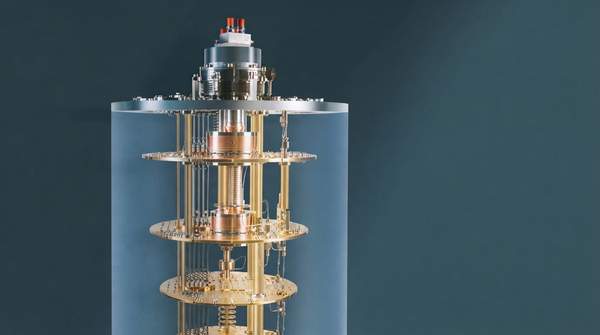
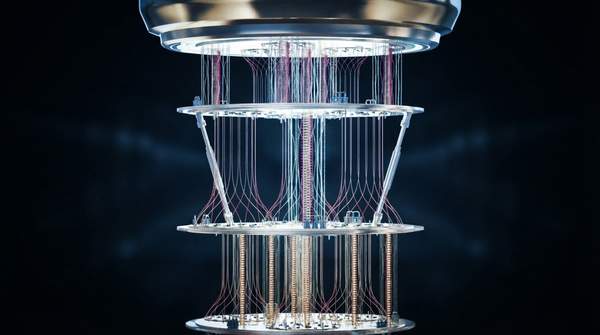
Physicists at the Center for Computational Quantum Physics (CCQ), collaborating with researchers at Boston University, have achieved a remarkable feat: they simulated a quantum system involving hundreds of interacting qubits using only a conventional computer. This wasn't just a simple exercise; these simulations delivered state-of-the-art accuracy. Imagine the complexity of trying to model the intricate dance of tiny particles, each influencing the others in a delicate quantum ballet. Yet, the team managed to do it with the kind of computing power you might find in a well-equipped lab, not a specialized quantum facility. The results matched both theoretical predictions and the findings reported by quantum computing researchers, all without needing access to a quantum computer itself, according to the Simons Foundation. This is like winning a high-tech race with a finely tuned sports car instead of a prototype rocket.
Groundbreaking insights into quantum physics and cosmology projects have been achieved, with 2026 expected to see continued significant progress. We often hear about the incredible promise of quantum computers, envisioning them as the only key to unlocking the universe's deepest secrets. But here's the twist: some of the most significant advancements in understanding complex quantum systems are being achieved right now with conventional computers and clever mathematical tools. It challenges our assumptions, doesn't it? It makes us rethink where the next big discoveries will truly originate.
So, what does this mean for you and our collective understanding of the universe? It suggests the immediate future of quantum understanding may rely more on innovative computational approaches and refined observational techniques than on the widespread deployment of fully functional quantum hardware. This path could lead to faster, more accessible insights into the universe's fundamental nature, democratizing discovery rather than reserving it for those with access to multi-million dollar quantum machines. It’s about smart science, not just big machines.
Measuring the Unimaginably Fast
Imagine trying to time something that lasts less than a billionth of a billionth of a second. That's what scientists are doing with attoseconds. In three-dimensional copper, a quantum transition was measured at an astonishing 26 attoseconds. These incredibly brief moments show us just how fast fundamental quantum processes can be, according to ScienceDaily. What happens when we look at other materials, where the atomic structures are arranged differently?
- 26 attoseconds — the surprisingly swift speed of a quantum transition observed in three-dimensional copper. This measurement highlights an extremely fast fundamental process, offering a glimpse into the blink-and-you-miss-it world of quantum mechanics, according to ScienceDaily.
- 140 to 175 attoseconds — the range for quantum transitions observed in layered materials like TiSe₂ and TiTe₂. This slower speed compared to copper suggests that the specific arrangement of atoms and electrons within a material can significantly influence how quickly these quantum events unfold, according to ScienceDaily.
- Exceeded 200 attoseconds — the longest duration for a quantum transition recorded in CuTe, a material characterized by its distinct chain-like atomic structure. This further demonstrates that the fundamental speed of quantum dynamics is not a universal constant but is intimately tied to the unique properties of each material, according to ScienceDaily.
Precise measurements, down to the attosecond scale, offer an unprecedented ability to observe and understand quantum events at their most fundamental and fleeting scales. It reveals that the speed of these tiny quantum processes isn't universal; instead, it's intimately tied to the material's structure. Think of it like a dance where the tempo changes depending on the ballroom. This understanding could open new possibilities for designing materials with tailored quantum properties for future projects, perhaps leading to more efficient electronics or advanced sensors. For you, this means we're getting closer to manipulating matter at its most basic level.
Quantum Keys to Cosmic Mysteries
In 1998, astronomers made a puzzling discovery that reshaped our view of the cosmos: certain supernovae appeared fainter than expected. This observation indicated that the universe's cosmic expansion is actually speeding up, a finding that profoundly challenged existing cosmological models and introduced the concept of "dark energy," according to NASA Science. Scientists are also developing detectors so sensitive they can spot particle interactions that might occur once in years or even decades, according to ScienceDaily. How do we explain such vast, cosmic phenomena and fleeting particle interactions with quantum physics?
| Cosmological Phenomenon | Observation/Challenge | Quantum Physics Relevance |
|---|---|---|
| Cosmic Expansion | Supernovae fainter than expected (1998) indicated accelerating expansion, leading to the mystery of dark energy. | Requires quantum-level explanations for the nature of dark energy and the accelerating expansion of the universe. |
| Rare Particle Interactions | Developing detectors sensitive enough for interactions occurring once in years or decades. This pushes the limits of observation. | Probing extremely rare and fleeting quantum phenomena is crucial for uncovering new particles and fundamental forces that are otherwise undetectable. |
This table illustrates how quantum insights are vital for understanding both the universe's largest structures and its most elusive particles, based on findings from NASA Science and ScienceDaily.
The relentless drive for extreme observational sensitivity, coupled with the perplexing discovery of accelerating cosmic expansion, reveals a critical need for new answers. We need quantum-level explanations to truly understand the universe's largest scales and its most subtle components. Imagine trying to understand a vast ocean by studying only its surface; quantum physics allows us to dive deeper, examining the fundamental currents and hidden life that shape everything. This quest for understanding promises to rewrite our cosmic textbooks.
Rewriting the Universe's Origin Story
For a long time, the Big Bang theory suggested a universe that began from an infinitely dense point—a classical singularity. But what if there was no such point? Loop quantum cosmology offers a theoretical framework that actually removes these classical singularities from our understanding of the universe's origin. This application of loop quantum gravity to homogeneous systems means we can now conceptualize a universe without an infinitely dense starting point, according to Science and Culture. What kind of profound changes does this bring to our cosmological models, and how does it reshape the very beginning of everything?
Instead of relying on classical evolution, this framework replaces it with a difference equation for a wave function. This innovative approach allows for the extension of quantum spacetime beyond these classical singularities. Think of it like moving from a rigid, fixed timeline to a more fluid, quantum description that can navigate points previously thought impossible to cross. It suggests a "quantum bounce" where the universe didn't begin from nothing, but rather from a previous contracting phase. Furthermore, a new version of perturbative inhomogeneity in loop quantum cosmology is also being introduced, further refining these complex models and allowing for even more precise predictions, according to Science and Culture.
Theoretical advancements show how quantum gravity principles are providing a robust mathematical framework to extend our understanding of spacetime beyond the traditional Big Bang. They offer a singularity-free origin for the universe, suggesting a continuous cosmic history rather than an abrupt, singular beginning. For you, this means we are moving closer to a more complete and consistent picture of how our universe began, one that aligns with the strange and wonderful rules of quantum mechanics. It's truly rewriting the universe's origin story.
The Enduring Legacy and Future Trajectory
The foundational work in quantum cosmology from decades past continues to shape our understanding today, proving that great ideas often take time to fully blossom.
When we talk about quantum physics and cosmology breakthroughs in 2026, it's easy to think everything is brand new. However, many of the ideas we're exploring today have deep roots. For example:
- Lecture notes on quantum cosmology were given as far back as 1995, laying critical early groundwork for future theories and sparking discussions among physicists about the quantum nature of the cosmos, according to arXiv.
- A key paper titled 'Cosmology: the Physics of the Universe' was published in 1996, further cementing theoretical principles and providing a crucial reference point.int for generations of researchers to come, according to arXiv.
These foundational works from decades past underscore the deep historical roots and continuous evolution of quantum cosmology. They demonstrate that many of today's breakthroughs often build on long-standing theoretical frameworks, refined and expanded over time. It reminds us that scientific progress is a marathon, not a sprint, with each generation building upon the insights of those who came before. This continuous development ensures that projects exploring quantum physics and cosmology breakthroughs in 2026 are grounded in a rich intellectual history, allowing us to stand on the shoulders of giants to see further into the cosmic unknown. It shows us the power of persistent inquiry.
Beyond the Quantum Hype
So, what does all this mean for our understanding of the universe and the future of scientific discovery? We are seeing several clear trends that challenge our preconceived notions and point towards exciting new directions:
- Conventional computers are powerful tools: The work by physicists at CCQ demonstrated that advanced classical computation, when paired with clever mathematical tools, can achieve state-of-the-art accuracy in simulating complex quantum systems. This directly challenges the popular narrative that only specialized quantum hardware will unlock quantum secrets, suggesting a broader, more accessible path to discovery.
- Material matters for quantum speed: Our understanding of quantum transitions has become incredibly precise. We've learned that these fundamental processes are not universal in speed; instead, their duration is intimately tied to the material's structure, ranging from a brisk 26 attoseconds in copper to over 200 attoseconds in CuTe. This insight opens brand new avenues for designing materials with tailored quantum properties for specific technological applications.
- Cosmic mysteries demand quantum answers: Explaining phenomena like the universe's accelerating cosmic expansion, driven by mysterious dark energy, and detecting extremely rare particle interactions requires increasingly sensitive observational capabilities and sophisticated quantum-level theoretical frameworks. Quantum physics is becoming indispensable for solving the universe's biggest puzzles.
- Foundational theories endure: Many of the exciting breakthroughs in quantum cosmology in 2026 and beyond are not appearing out of thin air. They are often rooted in theoretical work from the mid-1990s and earlier, highlighting the long-term, iterative nature of scientific progress and the enduring power of well-established ideas.
Our journey into the quantum universe is accelerating, driven by both innovative computational methods and increasingly precise observational tools. The Simons Foundation's insights into classical computer capabilities, combined with the detailed attosecond measurements reported by ScienceDaily, suggest that immediate and accessible pathways to quantum discovery are available now, perhaps even more so than relying solely on nascent quantum hardware. By 2026, we expect to see continued significant progress in understanding the universe’s most fundamental aspects, perhaps even faster than anticipated, as researchers continue to optimize both classical algorithms and experimental techniques. This means more answers to the universe's biggest questions are within our grasp, sooner than you might think.