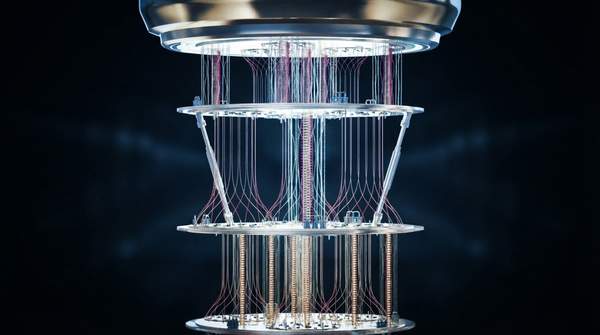
Physicists have, for the first time, linked individual molecules into special quantum states, pushing theoretical boundaries into a fragile reality. This recent research marks a new frontier in quantum manipulation. Concurrently, MIT researchers have advanced techniques to efficiently generate entanglement among arrays of superconducting qubits, accelerating quantum technology progress.
Quantum entanglement is the fundamental resource for quantum computing's power, but its extreme fragility makes harnessing it at scale incredibly challenging. The slightest environmental interference can break these delicate quantum links, a phenomenon known as decoherence, rendering the entangled state unusable for computation.
While significant strides are being made in generating and manipulating entangled states, the widespread practical application of quantum computing remains contingent on overcoming these fundamental control and stability hurdles. The focus shifts from merely demonstrating entanglement to engineering its resilience.
What is Quantum Entanglement and Its Forms?
Quantum entanglement describes a unique correlation between particles, making their quantum states interdependent regardless of physical separation. These entangled particles exist as a single, shared quantum state. Scientists now move beyond mere generation, actively developing methods to shift between different entanglement structures—Bell pairs, Greenberger–Horne–Zeilinger (GHZ) states, or graph states—each tailored for specific computational or communicational tasks, according to Nature. Researchers have demonstrated shifting entanglement states between types more likely to support quantum speed-up and those less so, as reported by Nature Index. This strategic manipulation is crucial; volume-law entanglement, where shared information grows proportionally with subsystem size, is considered vital for quantum advantage. Further, new methods for entangled measurements can now identify W states, experimentally shown with three photons, according to ScienceDaily. The ability to manipulate these various forms is critical for designing and optimizing quantum algorithms and applications.
How to Control and Stabilize Quantum Entanglement?
Stabilizing maximally entangled states of two noninteracting qubits requires complex engineering efforts. A protocol is proposed and analyzed for this, using active state-dependent feedback, according to arXiv. This sophisticated approach utilizes continuous two-qubit half-parity measurement, coordinated with a concurrent, non-commuting dynamical decoupling drive. The dynamical decoupling drive can be simultaneous with measurement and feedback, playing a key part in the protocol.
To mitigate feedback-delay error, a forward-state-estimation strategy tracks control signals in transit. This real-time, dynamic control system addresses entanglement's inherent fragility directly. Sophisticated technical solutions are crucial for overcoming quantum systems' inherent fragility, paving the way for robust, scalable quantum computation.
Multiple Approaches to Quantum Entanglement?
The quantum computing race sees simultaneous breakthroughs across distinct physical platforms. MIT researchers efficiently generate entanglement among arrays of superconducting qubits, while other research links individual molecules into quantum states, according to ResearchGate. Scalable quantum computing clearly emerges from these diverse approaches.
Maintaining entanglement coherence and utility over time remains a distinct problem. While creating entanglement advances for interacting systems like superconducting qubits, protocols are also proposed for actively stabilizing maximally entangled states of noninteracting qubits using feedback, according to arXiv. Both entanglement generation and its sustained stabilization demand separate, complex solutions.
Why Entanglement Engineering Matters for Quantum Computing?
Simultaneous breakthroughs in entangling superconducting qubits and individual molecules shift the quantum computing race from 'if' to 'how fast.' Integrated quantum technologies appear poised to accelerate practical applications sooner than anticipated. This rapid progress moves quantum computing closer to solving intractable problems.
Companies investing in quantum computing must recognize the primary bottleneck is no longer just hardware scale. Sophisticated, real-time control systems needed to stabilize fragile entanglement are equally critical. Advanced feedback and error mitigation protocols, like those detailed in arXiv, become as important as raw qubit count. The ability to engineer specific entanglement structures for different computational tasks, as noted by Nature Index, means future quantum algorithms will demand precisely tailored quantum states. This requires a deeper understanding of quantum information theory from developers.
What are the basic principles of quantum entanglement?
Entanglement creates a shared quantum state where particles, even when separated, exhibit correlated properties. For example, if one entangled particle is measured to have a spin-up, its partner immediately exhibits spin-down, regardless of distance. This instantaneous correlation underpins quantum information processing, allowing for quantum phenomena to be exploited in computation.
How is quantum entanglement used in quantum computing?
In quantum computing, entangled qubits allow for complex, simultaneous calculations that classical computers cannot perform. For instance, the ability to create and manipulate specific entanglement structures like graph states enables algorithms for factoring large numbers or simulating molecular interactions more efficiently than classical methods, vastly increasing computational power.
What is the difference between superposition and entanglement?
Superposition allows a single quantum particle, like a qubit, to exist in multiple states simultaneously until measured. Entanglement, however, describes a relationship between two or more particles where their fates are intertwined, even if individually they are in a superposition. While superposition refers to a single particle's state, entanglement describes a collective, non-separable state among multiple particles.
By Q3 2026, companies like IBM and Google will likely prioritize sophisticated real-time control systems for entanglement stabilization over raw qubit count, reflecting the evolving bottleneck in quantum computing development.