No quantum computing architecture wins on every metric. Superconducting qubits are fast but need cryogenic cooling. Trapped ions deliver exceptional fidelity but operate slowly. Neutral atoms promise scalable, reconfigurable systems, while photonic qubits work closer to room temperature but struggle to interact. Understanding these trade-offs is the key to following the race toward fault-tolerant quantum computing, and this guide breaks down each modality's qubit technology, strengths, and scaling obstacles side by side.
Introduction to Quantum Computing Architectures
Quantum computers encode information in qubits rather than classical bits, and the physical medium chosen for those qubits defines everything else about the machine. As the MIT Quantum Index Report explains, physical quantum systems are built using several distinct technical architectures, called modalities, each with a different method for encoding, processing, and reading out quantum information—yet all achieving comparable functionality through gate-based or measurement-based models.
We will compare the four modalities most prominent in current development: superconducting, trapped-ion, neutral atom, and photonic. A useful distinction, drawn from a review of neutral-atom quantum computing, separates "natural" qubits—trapped ions, neutral atoms, molecules, and photons, which are inherently identical and exhibit long coherence times—from fabricated qubits like superconducting circuits and semiconductor quantum dots, which are subject to material variations when many are integrated into one system. That distinction shapes much of the trade-off discussion that follows.
Superconducting Qubits: Speed and Integration
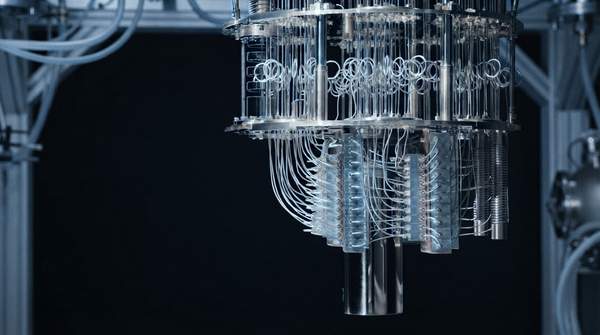
Superconducting qubits are built from superconducting circuits containing Josephson junctions, which maintain and manipulate quantum states. They are the modality most associated with large industrial programs, and their headline advantage is speed: as the MIT Quantum Index Report notes, trapped-ion gates are generally orders of magnitude slower than the fastest superconducting gates, which tells you where superconducting hardware sits on the speed spectrum.
The price of that speed is operational. Superconducting qubits operate at extremely low temperatures to avoid decoherence, and an academic review of qubit scalability highlights the remaining challenges with cooling and control systems. Maintaining cryogenic conditions for a growing number of qubits is resource-intensive, and the surrounding control electronics add complexity as systems scale. Because these circuits must be fabricated rather than occurring naturally, they are also subject to variations in material properties when integrating many qubits into a single system.
Trapped-Ion Qubits: Fidelity and Coherence
Trapped-ion systems use electrically charged atoms suspended in a vacuum by electromagnetic fields, with quantum information encoded in the ions' internal states and manipulated by lasers. Their defining strength is quality: as a neutral-atom computing overview reports, trapped-ion fidelities have reached 99.921% on Quantinuum's Helios hardware, a figure that other modalities are measured against.
The weakness is speed and scale. The same scalability review notes that scaling trapped ions beyond a small number of qubits is difficult due to slow ion movement, and the MIT Quantum Index Report confirms that trapped-ion gates are generally orders of magnitude slower than the fastest superconducting gates. Laser control of individual ions also becomes more complex as the qubit count grows. The result is a modality that excels at precise, high-fidelity operations but faces an engineering climb toward large processors.
Neutral Atom Qubits: Scalability and Connectivity
Neutral-atom systems trap uncharged atoms in optical tweezers or lattices, typically encoding qubits in two hyperfine levels of an atom's ground state. Two-qubit gates are formed by exciting pairs of atoms to the Rydberg state, an approach a neutral-atom review describes as one of the strongest interactions in atomic physics.
Two advantages stand out. First, because atoms are naturally occurring qubits, they are identical, offering inherent uniformity and very long coherence times—40 seconds has been demonstrated on Atom Computing's strontium-87 platform, with seconds-scale coherence routine on rubidium, though these figures vary by platform and atom type. Second, as PostQuantum's Marin Ivezic explains, reconfigurable connectivity most distinguishes neutral atoms: between circuit layers, optical tweezers can physically move atoms into proximity for Rydberg interaction without the SWAP-gate overhead other modalities pay.
The challenges are equally clear. The scalability review identifies scaling toward a million qubits, developing control electronics at scale, and managing higher error rates compared to other technologies as the modality's core difficulties. Single-qubit fidelities exceed 99.9% and are not the limiting factor; the gap between that and trapped-ion performance is the primary technical challenge for the modality.
Photonic Qubits: Room Temperature and Communication Potential
Photonic quantum computing uses photons to represent qubits, and unlike the other three modalities, it does not depend on cryogenic cooling or electromagnetic ion traps to operate. That makes photons a natural fit for quantum communication, where light is already the standard carrier, and it underlies the modality's long-term appeal for networked quantum systems.
The trade-off is in how photons behave. The scalability review notes that photonic qubits operate probabilistically, with challenges including photon loss and maintaining fidelity. Photons also interact weakly with their environment—which is a virtue for transmission but an obstacle for computation, since two-qubit gates fundamentally require qubits to interact. The evidence reviewed here does not establish a specific gate-fidelity benchmark for photonic systems, so we present their advantages qualitatively rather than numerically.
Why Error Correction Is the Central Challenge
Every modality above faces the same underlying obstacle: quantum states are fragile, and physical qubits make mistakes. Industry overviews of quantum platforms typically describe physical error rates in the range of roughly 0.1% to 1%, and these figures are illustrative general ranges rather than definitive benchmarks, since standards for comparing modalities are still evolving.
The field's answer is quantum error correction: combining many unreliable physical qubits into one more reliable logical qubit. Research on spin-qubit architectures, for example, constructs a logical qubit from a planar array of quantum dots and evaluates logical state preparation fidelity and cycle-level error correction performance using state-of-the-art experimental parameters. The implication is consistent across modalities—useful, fault-tolerant computation will require large overheads of physical qubits per logical qubit, which is precisely why each architecture's scalability challenge matters so much.
Comparative Overview of Quantum Computing Architectures
The table below synthesizes the four modalities across a consistent set of dimensions: qubit basis, key operational advantage, and primary scalability challenge. Reading down the columns reveals the pattern that defines the field—every strength is paired with a corresponding engineering burden.
| Architecture | Qubit Basis | Key Operational Advantage(s) | Primary Scalability Challenge(s) |
|---|---|---|---|
| Superconducting | Superconducting circuits with Josephson junctions; requires extremely low temperatures | Fast gate operations | Cooling infrastructure and complex control systems for large-scale integration |
| Trapped-Ion | Charged atoms held in vacuum by electromagnetic fields, manipulated by lasers; information in internal ion states | High-fidelity gates—99.921% reported on Quantinuum Helios—and long coherence | Slow ion movement; gates orders of magnitude slower than fastest superconducting gates; complex laser control |
| Neutral Atom | Uncharged atoms in optical tweezers or lattices; Rydberg excitation for two-qubit gates; inherently identical atoms | Long coherence (40 seconds demonstrated on strontium-87, varying by platform and atom type); reconfigurable connectivity without SWAP overhead | Scaling toward a million qubits; control electronics at scale; higher error rates than other technologies |
| Photonic | Photons representing qubits, operating probabilistically | Operation without cryogenic requirements; natural fit for quantum communication | Photon loss; maintaining fidelity; weak qubit interaction complicates two-qubit gates |
Three trade-off axes emerge from this comparison. Speed versus fidelity: superconducting gates are fastest, while trapped ions lead on accuracy. Uniformity versus fabrication: natural qubits—ions, atoms, photons—are identical, while fabricated circuits vary with material properties. And connectivity versus control: neutral atoms gain reconfigurability from physical atom movement, but every modality must solve control electronics at scale.
Navigating the Path to Fault-Tolerant Quantum Computing
To achieve fault-tolerant quantum computing, each architecture must overcome its specific scalability challenges, primarily by improving qubit fidelity and developing robust error correction techniques. There is no single winner here: the superconducting path runs through cryogenic engineering, the trapped-ion path through gate speed and laser control, the neutral-atom path through error rates at scale, and the photonic path through photon loss and interaction.
How can you track whether any of them is succeeding? Progress can be observed through reported advancements in logical qubit fidelity, reductions in the physical qubit overhead required for logical qubits, and increased qubit counts in operational systems. Those three indicators—logical fidelity, overhead ratio, and raw qubit count—are the measurable signals that will show which architectural trade-off is being converted into a working, fault-tolerant machine.
Sources
- Quantum Processor Benchmarking | MIT Quantum Index Report 2026 - Quantum Index Report — Quantum Index Report -
- Neutral atom quantum computing — ARXIV
- MDPI
- Neutral Atom Quantum Computing: The Room-Temperature QC — PostQuantum.com
- Comparison of spin-qubit architectures for quantum error-correcting codes — ARXIV