For the first time, a natural enzyme has accurately read and transcribed an eight-letter genetic alphabet, effectively doubling the fundamental code of life. This achievement in 2026 could reshape how we store information and even how we engineer biological systems. Think of biological hard drives, now potentially capable of storing vastly more data than current technology, opening new frontiers for synthetic biology.
Life's genetic code has been understood as a fixed four-letter system, but researchers have now shown that natural enzymes can robustly transcribe an eight-letter synthetic alphabet. This tension between established biological dogma and new scientific capability is at the heart of this breakthrough.
Based on this breakthrough, the development of organisms with expanded genetic capabilities and ultra-dense biological data storage appears increasingly feasible, though practical applications will require overcoming current fidelity challenges.
How Does Life's Core Machinery Adapt to New Letters?
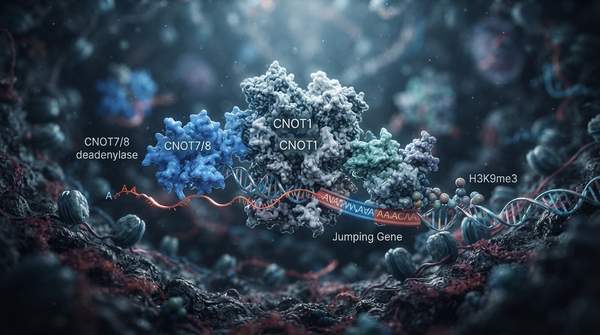
What allows natural enzymes to handle these new genetic components? RNA polymerase identifies synthetic DNA letters using many of the same biochemical and structural signals it relies on to recognize natural base pairs, according to ScienceDaily. This suggests the enzyme isn't 'reprogrammed' for new letters; instead, it leverages its existing recognition capabilities.
This reveals a deep-seated, latent capacity within the enzyme for non-natural components, proving life's fundamental machinery is far more adaptable than previously understood. This inherent versatility could mean that the biological toolkit for engineering new life forms is far richer than we ever imagined.
How Did Scientists Build an Eight-Letter System?
Bacterial RNA polymerase successfully transcribes an eight-letter genetic system, incorporating four natural nucleotides and four synthetic ones, according to The Brighter Side of News. This expanded code, featuring two synthetic base pairs (P:Z and B:S), functions robustly in transcription by E. coli RNAP and, crucially, these synthetic pairs are orthogonal, as detailed in Nature. This orthogonality is key: it means the new letters can integrate without disrupting existing biological processes, moving beyond mere theoretical possibility to proven practical functionality.

What are the Benefits of an Expanded DNA Alphabet?
E. coli bacteria's RNA polymerase not only recognizes and incorporates two synthetic base pairs not found in nature, according to Phys, but can even handle another pair of synthetic bases without the traditional hydrogen bonds that typically hold genetic material together, as also highlighted by Phys.org. This remarkable adaptability fundamentally challenges our understanding of genetic recognition itself.
Such versatility suggests the genetic alphabet could expand in multiple, perhaps unexpected, ways. This opens the door to a vast array of new biological functions and materials, implying that the true limits on synthetic life forms are more about human ingenuity than inherent biological constraints. Imagine designing entirely new proteins or metabolic pathways with this expanded toolkit.
What Challenges Remain for Expanded DNA?
Despite the promise, challenges remain. The synthetic nucleotide Z, for instance, can lose a proton and pair undesirably with the natural base guanine, creating unwanted Z:G mismatches, according to The Brighter Side of News. Such mispairing directly compromises the accuracy of genetic information, a critical hurdle for any practical application.
Fortunately, researchers quickly addressed this by developing a modified version of Z, called Z*. By replacing its nitro group with a carboxamide group, they significantly reduced mispairing with guanine, as reported by The Brighter Side of News. This meticulous engineering is crucial; it underscores that while the initial breakthrough is monumental, the path to practical applications will hinge on ensuring the absolute stability and accuracy of this expanded genetic code.
Understanding the Research Process
What scientific methods helped researchers understand this expanded genetic alphabet?
How did scientists unravel this expanded genetic alphabet? The study meticulously investigated the recognition and incorporation of the P:Z base pair by E. coli RNA polymerase (RNAP) using a combined biochemistry and structural biology approach, according to Nature. This interdisciplinary method, blending biochemical assays with detailed structural analysis, allowed researchers to precisely understand the molecular interactions between the enzyme and its synthetic components.
Looking ahead, the implications for data storage are immense. Companies developing next-generation archival systems should actively explore this expanded genetic alphabet. By late 2026, the successful engineering of modified synthetic bases like Z* to overcome initial mispairing issues suggests a highly stable and ultra-dense biological data archive is not just a dream, but an increasingly tangible reality.