Imagine a cosmic clock where the ticks mark major evolutionary leaps. A Bayesian analysis suggests the time between these ticks often stretches beyond Earth's entire lifespan, making our planet's complex life an improbable outlier, according to PMC. The very existence of you and me is like winning an astronomical lottery.
Yet, complex life and societies have indeed emerged on Earth. From the first cells to the intricate web of human civilization, our planet has seen at least eight major evolutionary transitions. The statistical likelihood of these "great evolutionary transitions" occurring within a planet's habitable window is incredibly low, posing a profound tension.
Based on the extreme rarity of these transitions, the emergence of intelligent life elsewhere in the universe appears far less probable than commonly assumed. Earth may be an exceptionally unique case, urging us to look at our own world with renewed wonder.
These pivotal moments, from the first cells to complex societies, involve formerly independent units choosing to cooperate, forming new, higher-level biological entities. Think of single cells uniting into a multicellular organism. These shifts don't just alter life's appearance; they fundamentally change how heritable information is stored and transmitted, challenging our intuitive sense of life's prevalence.
What Are Great Evolutionary Transitions?
Great evolutionary transitions mark fundamental shifts in life's organization. For instance, free-living bacteria evolved early in Earth's history, as noted by Physics Duke. While simple life might be common across the cosmos, the journey to complexity is far from guaranteed.
One major leap was the origin of the eukaryotic cell from prokaryotes, introducing compartments and specialized functions. Another critical step, multicellularity, saw individual cells cooperate to form larger organisms, according to Astrobiology Nasa. The evolution of sexual reproduction also accelerated adaptation by combining genetic information in new ways. These examples show how life repeatedly moved from independent units to integrated, higher-level entities, each time unlocking new potentials.
The Genetic Drivers of Complexity
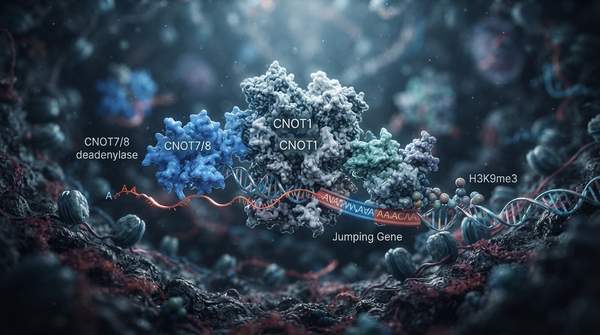
The regulation of genes, not just the creation or modification of genes themselves, has driven macroscopic evolutionary events, according to PMC. Think of it like a computer: the hardware (genes) might stay similar, but the software (gene regulation) gets an upgrade, unlocking new capabilities.
Changes in these regulatory networks can lead to significant innovations in an organism's form and function, even without altering the basic protein sequences. Epigenetic mechanisms, which control when and how genes are expressed, play a crucial role in coordinating cellular behavior within complex organisms. This intricate control allows for specialized tissues and organs to develop.
New developmental programs rely heavily on rewiring existing gene regulatory circuits. The bottleneck for complex life, then, isn't about generating new biological 'hardware' but rather the incredibly slow and improbable development of sophisticated 'software' to control it. Grand evolutionary innovation often stems from novel ways of orchestrating genetic information.
Earth's Improbable Path to Intelligence
Intelligent life appeared relatively late in Earth's history, which scientists consider evidence for a handful of rare evolutionary transitions, according to PMC. Our journey to self-awareness and advanced technology was not a foregone conclusion. The transition to complex animal societies, whether the intricate colonies of ants or our own global human civilization, represents a high-level evolutionary leap.
Consider the development of language and culture in humans. These abilities facilitated unprecedented information transfer and cooperation, allowing us to build upon each other's knowledge. Yet, despite billions of years of life on our planet, only one species has developed advanced technology and self-awareness. That's us.
Intelligence's late appearance, after eons of prior evolution, reveals the immense hurdles in achieving such complex organization. Our place in the cosmos might be far more special, and perhaps lonely, than we often imagine.
Cosmic Implications: Where is Everyone Else?
If these transitions are so rare, what does it mean for our search for life beyond Earth? A model based on evolutionary transition times provides testable predictions, suggesting that planets orbiting M dwarf stars, for instance, are uninhabitable, according to PMC. This insight significantly refines our cosmic search.
The 'Rare Earth hypothesis' suggests that the specific combination of astrophysical and geological events needed for complex life is exceedingly rare. Consider the crucial factors like a stable star, a large moon to stabilize a planet's tilt, active plate tectonics for nutrient cycling, and a protective magnetic field. These are not universal features.
Understanding these improbable transitions helps us refine the search for extraterrestrial intelligence (SETI). Instead of looking everywhere, we can focus on more promising planetary candidates. Based on the Bayesian analysis, humanity's existence isn't just rare, it's an astronomical lottery win, implying our search for intelligent alien life might be fundamentally misguided. If the conditions for these transitions are so specific and rare, it drastically narrows the potential candidates for habitable planets and the likelihood of finding advanced civilizations.
Common Questions About Evolutionary Transitions
What makes great evolutionary transitions distinct from other evolutionary changes?
Great evolutionary transitions are not simply gradual changes over time. They represent fundamental reorganizations of life, where individual units (like cells) combine to form new, higher-level entities (like organisms). This involves a shift in how selection operates, moving from individual units to the new collective.
Why have some complex traits, like multicellularity, evolved multiple times?
The concept of great evolutionary transitions helps explain why certain complex forms of life, such as multicellular organisms, have evolved independently multiple times across different lineages. This phenomenon, known as convergent evolution, suggests that while the transitions are rare, the underlying genetic and ecological pathways can be accessible under specific conditions, leading to similar outcomes.
What is one challenge in forming a new, higher-level biological entity?
A significant challenge in these transitions involves the suppression of conflict among the lower-level units for the benefit of the newly formed higher-level unit. For example, in a multicellular organism, individual cells must 'give up' their independent reproductive potential to contribute to the survival and reproduction of the whole organism. This cooperation is key to the new entity's success.
While Earth's unique evolutionary journey appears to be an astronomical lottery win, continued research, like the European Space Agency's astrobiology missions with a projected budget over €100 million by 2026, will likely refine our understanding of life's potential beyond our miraculous planet.