In 2014, a prominent article in Nature directly posed the question: 'Does evolutionary theory need a rethink?' Such an inquiry from a leading scientific journal marked a substantial shift in how researchers considered the core principles of evolution, particularly concerning how genetics, epigenetics, and paleontology refine our understanding.
The Modern Synthesis provides a robust framework for understanding evolution. However, new evidence from genetics, epigenetics, and paleontology reveals significant gaps in its explanatory power, especially regarding long-term evolutionary patterns.
Evolutionary biology is undergoing a significant refinement, likely leading to a more nuanced and integrated understanding of how life adapts and diversifies across vast timescales.
The Modern Synthesis: A Powerful, Yet Incomplete Picture
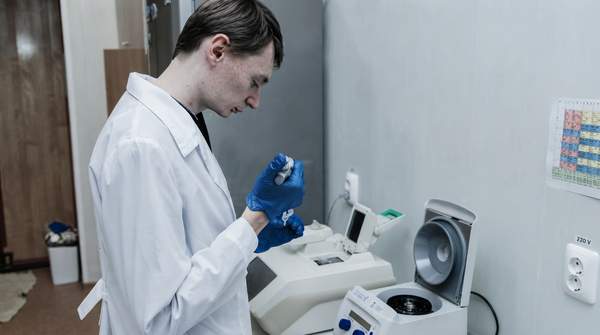
The Modern Synthesis, established in the mid-20th century, combined Darwinian natural selection with Mendelian genetics. This framework explains evolution primarily through genetic variation, inheritance, and selection acting on populations. However, modern genomic technologies are now providing high-resolution insights into genetic diversity, pushing the boundaries of this traditional gene-centric view of evolution.
A recent study, for example, generated a dataset of 128 high-coverage whole genomes from Indigenous individuals across 8 Latin American countries, representing 45 populations and 28 language families, according to Nature. Detailed genomic information reveals complexities in human genetic variation that the Modern Synthesis alone struggles to fully reconcile. While powerful, the Modern Synthesis offers an incomplete picture of life's intricate evolutionary journey.
Challenging Genetic Determinism: The Role of Epigenetics and Development
The Amazon molly species has persisted for approximately 100,000 years, defying the conventional evolutionary expectation of extinction for asexual species, according to BBC. The Amazon molly's remarkable longevity for a species that reproduces clonally directly contradicts the Modern Synthesis's prediction that asexual organisms are evolutionary dead-ends prone to rapid disappearance.
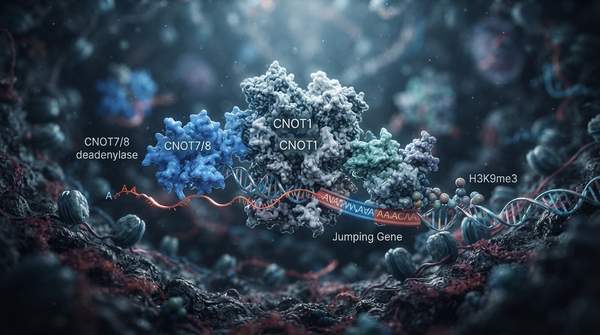
The Amazon molly's 100,000-year persistence forces a re-evaluation of what constitutes 'fitness' in the grand scheme of life. Its long-term survival suggests that factors beyond simple genetic recombination, such as epigenetic mechanisms or environmental interactions, play a crucial role in evolutionary resilience.
Paleontology's Perspective: Stasis, Extinction, and Misleading Narratives
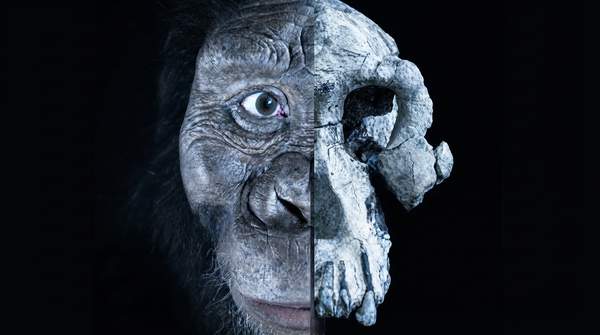
The fossil record offers a different perspective on evolutionary change. It shows that evolutionary responsiveness in local populations on decadal or centennial timescales usually translates, at the 1- to 10-million-year timescale, into stasis or non-directional random walks, rather than sustained, directional evolutionary transformation, according to pmc. The observation exposes a critical disconnect between microevolutionary observations and macroevolutionary patterns.
Furthermore, relying solely on recent taxa in analyses of origins can definitively mislead, as the diversity and disparity of many extant clades have demonstrably declined in the latest Cenozoic, according to the future of the fossil record: paleontology in the 21st century. Extinction can also generate a false signal regarding the origin of evolutionary novelties when only extant taxa are analyzed. The paleontological record reveals that evolution often proceeds through periods of stasis and random shifts. A complete understanding, therefore, requires looking beyond living species to avoid misinterpreting evolutionary origins and trajectories.
Based on these paleontological insights, evolutionary biologists must confront the uncomfortable truth that our current models may overemphasize directional selection and underappreciate the forces maintaining stability or non-directionality in life's history. Analyzing only extant taxa, for instance, can mislead about evolutionary novelties, meaning our current understanding of biodiversity's origins is likely biased, potentially obscuring the true drivers of past diversification and the impact of extinctions.
The Urgency of a Broader View: Rapid Evolution in Action
The need for a broader evolutionary framework extends beyond academic debate into pressing real-world issues. For instance, phylogenetic analyses suggest that the Cuban subclade of the 2024 Oropouche virus outbreak was introduced from Brazil in early 2024, according to Nature. The rapid spread and localized evolution of pathogens vividly illustrate life's constant, dynamic nature.
A more comprehensive evolutionary framework is essential for understanding and responding to rapid biological changes, such as the emergence and spread of new pathogens. Understanding non-directional evolutionary dynamics and correcting for biases from extant biodiversity can inform strategies for public health and conservation. A broader view helps predict how organisms, including viruses, will adapt and diversify.
Addressing Common Questions About the Extended Evolutionary Synthesis
How has genetics changed our understanding of evolution?
Beyond simply identifying genes, modern genetics now reveals complex regulatory networks, gene duplication events, and horizontal gene transfer. These mechanisms show that evolutionary change is not always a simple, linear process, introducing new dimensions to how traits arise and spread through populations, according to a new evolutionary synthesis - developmental biology - ncbi - nih.
What is the role of epigenetics in evolution?
Epigenetics involves heritable changes in gene expression that occur without altering the underlying DNA sequence. These modifications can influence how organisms respond to environmental cues and can sometimes be passed down across generations, providing a mechanism for rapid, non-genetic adaptation, according to a new evolutionary synthesis - developmental biology - ncbi - nih.
How does paleontology support evolutionary theory?
Paleontology supports evolutionary theory by providing a deep-time perspective, revealing the long-term patterns of life's history, including mass extinction events and subsequent diversification. It documents the existence of transitional forms and the vast changes in biodiversity over millions of years, offering concrete evidence of evolutionary processes, according to the future of the fossil record: paleontology in the 21st century.
Evolution: A Story Still Unfolding
The ongoing discussion surrounding the Modern Synthesis and the need for an Extended Evolutionary Synthesis makes clear that our understanding of life's history and future evolutionary trajectories remains a story still unfolding.
Embracing a more comprehensive evolutionary framework allows scientists to ask new questions and develop more accurate models. These models can better predict and understand the future of life on Earth, from disease evolution to biodiversity conservation. By 2026, researchers leveraging high-resolution genomic data and new paleontological discoveries aim to present more integrated models, enhancing our predictive capabilities for biological responses to environmental changes.