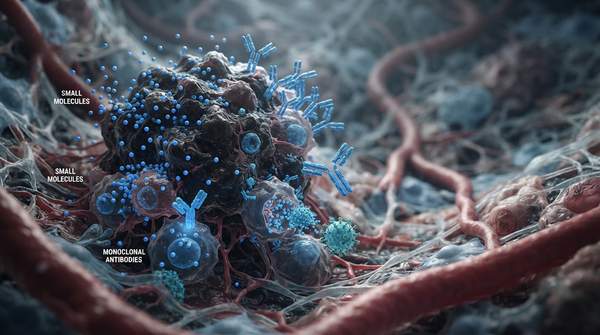
Antibiotic resistance is outpacing the drugs designed to beat it, and the conventional antibiotic pipeline is no longer enough on its own. But four biotechnological approaches—phage therapy, antimicrobial peptides (AMPs), CRISPR-based antimicrobials, and nanoparticles—attack resistant bacteria in fundamentally different ways. Some work by hitting a chosen pathogen with surgical precision; others by acting broadly or by delivering existing weapons more effectively. Understanding how each one works, and where each one struggles, is the key to seeing where the field is heading and why no single technology will "win" the fight.
The Escalating Threat of Antimicrobial Resistance and the Need for Novel Solutions
Why do we need alternatives to antibiotics at all? Because bacteria adapt. As one review of phage therapy clinical trials puts it, "Infectious diseases continue to plague the world because bacteria can adapt and develop defence mechanisms against antibiotics." The growing incidence of antibiotic-resistant bacterial infections, that review notes, necessitated the development of new treatment techniques worldwide. This is not a hypothetical future problem—it is a present, escalating driver of new research.
A survey of innovative AMR strategies published in the biomedical literature frames the response in similar terms: the growing threat of AMR demands innovative therapeutic strategies beyond conventional antibiotics. Four technologies stand out in that literature—phages, peptides, CRISPR systems, and nanotechnology—each complementing traditional discovery methods while addressing key limitations of conventional antibiotics. The same survey is careful in its language: each approach presents its own "unique advantages and challenges in clinical translation."
That qualification matters. Every one of these technologies is promising in principle and difficult in practice. Their integration into antimicrobial development pipelines, the survey authors argue, offers a comprehensive strategy to combat the escalating AMR crisis—note the plural. The field's working assumption is that these tools will work together, not in isolation.
Phage Therapy: Precision Viral Attack
Bacteriophages are viruses that naturally prey on bacteria. Phage therapy uses them to specifically target and infect resistant bacterial strains, leading to their eradication. The mechanism is elegantly selective: a phage recognizes its bacterial host, injects its genetic material, and hijacks the cell to produce more phages until the bacterium bursts. The approach has re-emerged as a promising alternative precisely because of this specificity—it strikes the pathogen with what the literature describes as minimal impact on commensal flora, the beneficial bacteria our bodies depend on.
That stands in direct contrast to broad-spectrum antibiotics, which clear both harmful and helpful bacteria. For infections where preserving the microbiome matters—gut infections, for instance—that difference is a genuine advantage, not a marketing point.
Where does phage therapy stand clinically? Trials have demonstrated efficiency against antibiotic-resistant bacteria, according to the clinical-trials review. But the same review is explicit about what remains unresolved: future clinical trials must scrutinize phage resistance implications (bacteria can evolve defenses against phages too), assess combination strategies with antimicrobial agents, and address challenges in phage therapy delivery. In other words, the concept has passed its first clinical test, but the practical questions—resistance, delivery, and how to combine phages with existing drugs—are still open.
Antimicrobial Peptides (AMPs): Broad-Spectrum Defenders
AMPs—both natural and synthetic—take the opposite strategic approach to phages. Rather than targeting one pathogen, they demonstrate broad-spectrum activity against multidrug-resistant pathogens. That breadth matters in a clinical setting where the infecting organism may be unknown or where multiple resistant species are present. A single peptide can hit a wide range of resistant bacteria rather than requiring the precise pathogen matching that phage therapy demands.
Their second advantage is durability. According to the research literature, AMPs reduce the likelihood of resistance developing against them—meaning bacteria struggle to evolve defenses as readily as they do against conventional antibiotics. If resistance is the core problem driving this entire field, a treatment class that inherently raises the bar for resistance is a structural advantage.
The trade-off is symmetric with phage therapy's: what phages gain in precision, AMPs gain in reach, and both pay for it elsewhere. Like phage therapy, AMPs face their own hurdles in clinical translation—the journey from promising molecule to approved medicine is not straightforward, and the surveyed literature does not detail specific clinical trial phases for AMP candidates. Broad-spectrum activity also cuts both ways in principle: a treatment that hits many bacteria may not spare commensals the way a pathogen-specific phage would.
CRISPR-based Antimicrobials: Genetic Targeting of Resistance
CRISPR turns the enemy's own genome into the target. Rather than attacking the bacterial cell from outside, CRISPR-based gene editing systems are used for resistance gene silencing or targeted bacterial killing—disabling the very genes that make bacteria dangerous, or destroying the cell outright when the edit lands. The precision is genetic rather than organismal: where a phage distinguishes "this bacterium from that one," CRISPR can in principle distinguish "this gene from that one."
This approach is already being tested in humans, and the clearest example combines two of the four technologies in this article. In May 2023, the Danish company SNIPR Biome announced positive interim results from its Phase 1 trial of SNIPR001, described in trade reporting as "the first CRISPR-armed phage therapy developed to target and eradicate E. coli, including antibiotic-resistant strains, from the human gastrointestinal tract."
Read that carefully: the CRISPR payload rides inside a phage. The precision of gene editing is delivered by the specificity of a virus. That pairing is not a coincidence—it is a preview of how these technologies may be deployed together, each solving the other's delivery problem.
What Phase 1 does not establish is efficacy at scale. A Phase 1 trial is an early clinical stage, and the reported results were interim. The surveyed literature does not detail Phase 2 or Phase 3 outcomes for CRISPR-based antimicrobials, so the appropriate reading is: proof of concept in humans exists; the decisive clinical evidence does not yet.
Nanoparticles: Targeted Delivery and Multifaceted Action
Nanotechnology contributes a different capability to the arsenal: targeted drug delivery. Rather than primarily acting as an antimicrobial itself, the nanoparticle approach aims to get antimicrobial payloads where they need to go with precision. Think of it as the logistics layer of the field—an enabling technology that could improve how other therapies, including conventional drugs, reach their bacterial targets.
The broader survey of emerging technologies positions nanotechnology alongside bacteriophage therapy for pathogen-specific eradication, CRISPR-based gene editing for resistance gene silencing, immunotherapy to boost host defenses, and precision medicine tailored to individual and microbial profiles. These innovations, the authors argue, when integrated into health systems alongside surveillance and stewardship programs, have the potential to redefine AMR control in both high-income and resource-limited settings.
That last phrase deserves attention: the ambition for these tools is global, not confined to well-resourced hospitals. The trade-off is that the surveyed literature offers less documented detail on nanoparticles' specific clinical-stage challenges and development status than it does for the biological approaches—so we present their mechanism and advantages here without inventing a fuller picture than the evidence supports.
Comparative Overview of Biotech Approaches to AMR
The table below compares the four approaches across mechanism, advantages, challenges, and development stage, drawing together the strands from each section. The central trade-off it reveals is specificity versus breadth: phages and CRISPR aim precisely at chosen pathogens and resistance genes, while AMPs and nanoparticles favor broad or enabling activity.
| Technology | Mechanism of Action | Key Advantages | Significant Challenges | Development Stage |
|---|---|---|---|---|
| Phage Therapy | Bacteriophages specifically infect and eradicate resistant bacterial strains | Pathogen-specific targeting with minimal impact on commensal flora | Phage resistance implications, delivery challenges, and combination strategies with antimicrobials still under study | Clinical trials have shown efficiency against antibiotic-resistant bacteria |
| Antimicrobial Peptides | Broad-spectrum activity against multidrug-resistant pathogens (natural and synthetic forms) | Wide coverage of resistant bacteria; reduced likelihood of resistance development | Challenges in clinical translation | Not detailed in the surveyed literature |
| CRISPR-based Antimicrobials | Gene editing for resistance gene silencing or targeted bacterial killing | Genetic-level precision—can target resistance itself rather than just the organism | Early clinical stage; decisive efficacy evidence not yet available | Phase 1 trial of CRISPR-armed phage therapy (SNIPR001) reported positive interim results in May 2023 |
| Nanoparticles | Targeted drug delivery | Complements traditional discovery methods; potential to redefine AMR control across settings | Not detailed in the surveyed literature | Not detailed in the surveyed literature |
Reading the table, a pattern emerges that no single row shows alone. The two targeting approaches—phages and CRISPR—offer precision but must solve resistance and delivery questions, and notably CRISPR's clearest clinical progress came from borrowing phage delivery. The two broader approaches—AMPs and nanoparticles—offer reach and versatility, with AMPs holding the structural advantage of slowing resistance evolution, but with less documented clinical progress in the surveyed literature. The four do not compete for the same niche; they address different gaps in the conventional arsenal.
Two boundaries on this comparison deserve explicit statement. First, the development-stage column reflects what is publicly documented in the surveyed scientific literature; proprietary programs may be further along than published accounts indicate. Second, this is an overview of emerging technologies, not medical advice—no reader should treat any entry in the table as an available or recommended treatment.
Navigating the Future of AMR Treatment
Researchers and healthcare stakeholders should prioritize the continued development and clinical translation of diverse biotechnological approaches to AMR, recognizing their distinct mechanisms and their potential to overcome the limitations of traditional antibiotics. The practical lesson of the comparison is that these are complements, not competitors: a CRISPR payload rides inside a phage, and a nanoparticle could in principle deliver a peptide. The strongest programs will likely be the ones that combine the four strategically rather than betting on one.
The concrete measure of progress: monitor the progression of leading candidates in phage therapy, AMPs, and CRISPR-based antimicrobials through Phase II and III clinical trials, and the emergence of new nanoparticle applications. Of these, the clearest dated marker so far is SNIPR001's positive Phase 1 interim results reported in May 2023—the first clinical evidence that a CRISPR-armed phage can target antibiotic-resistant E. coli in the human gut, and the first time two of these four technologies have been tested as one medicine in humans.
When a Phase 2 result follows—or when an AMP or nanoparticle candidate reaches the trial stages the literature has not yet documented—the field will have moved from promising mechanism to demonstrated medicine. Until then, the honest summary is: the mechanisms are distinct, the early evidence is encouraging, and the decisive trials are still ahead.