
Particle Accelerators
3 articles
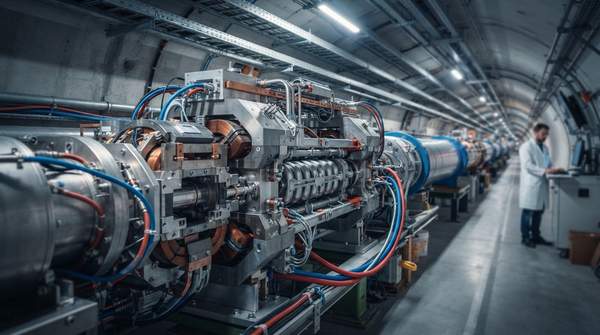
How Particle Accelerators Work: Electric Fields Push, Magnetic Fields Steer
Particle accelerators use electric fields to boost particles to high energy and magnetic fields to steer them, enabling scientists to probe fundamental physics by smashing particles together and recording the results. The two main types, linear and circular, serve different experimental needs in unlocking the universe's secrets.
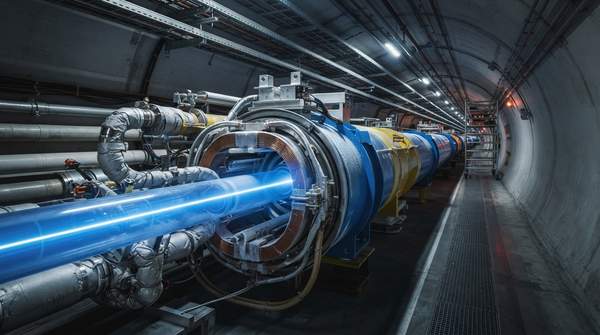
Bending and Focusing: How Superconducting Magnets Steer Particle Beams Through the Large Hadron Collider
Superconducting magnets are essential for particle accelerators like the LHC, enabling high-energy beams through powerful bending and focusing fields. Maintaining these magnets at cryogenic temperatures, colder than outer space, is critical for their superconductivity and the machine's compact design.
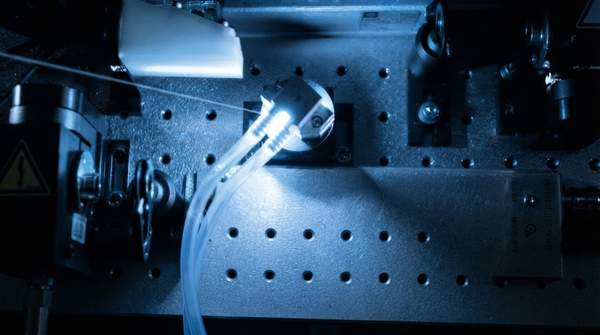
Plasma Accelerators: How Laser Pulses and Electron Beams Create Powerful Wakes
Plasma wakefield acceleration uses intense laser pulses or electron beams to create powerful electric wakes in plasma, enabling particle acceleration gradients far exceeding conventional methods. This technology promises more compact and potent particle accelerators for future research.