Science and Discovery
Cosmos & SpaceHealth & MedicinePhysics & QuantumTechnology & AI
Science and Discovery

Reporting from the frontiers of human knowledge.

Science and Discovery provides in-depth reporting and analysis on the latest breakthroughs in scientific research and exploration. From the vastness of space to the intricacies of the quantum realm, we cover the discoveries that are shaping our future.

Sections

  • Cosmos & Space
  • Earth & Environment
  • Life & Biology
  • Health & Medicine
  • Physics & Quantum
  • Technology & AI
  • Explainers

Writers

Meet our writers →

Trending Topics

Wellness TechnologyEvolutionGeneticsHolistic HealthBox OfficeHealthcare PolicyPharmaceuticalsPublic Health

About

  • Contact
  • Privacy Policy
  • Terms of Service

© 2026 Science and Discovery. All rights reserved.

  1. Home
  2. /Life & Biology
  3. /Manakins evolved to eat fruit by repurposing umami receptors
Life & Biology

Manakins evolved to eat fruit by repurposing umami receptors

A single male manakin can consume its entire body weight in berries in only 1.5 hours.

DG
David Grossman

July 21, 2026 · 3 min read

A small, colorful manakin bird with bright plumage perched on a berry-laden branch, showcasing its specialized fruit-eating adaptation.

A single male manakin can consume its entire body weight in berries in only 1.5 hours, a feat documented in ongoing research according to aliceboyle. Such efficiency reveals the extreme dietary specialization of these small birds. Their capacity to process vast quantities of fruit suggests profound evolutionary shifts in their digestive and sensory systems.

Manakins lost their ancestral sweet taste receptors, yet they evolved into highly specialized fruit-eaters. They achieved this by repurposing an umami receptor to detect sugars, allowing them to thrive on a fruit-rich diet. This unexpected genetic maneuver challenges our conventional understanding of adaptation.

Evolutionary pathways, it appears, are more flexible and opportunistic than once imagined. The manakin's journey powerfully illustrates how species can adapt to specific dietary niches through surprising genetic reconfigurations. It's a testament to life's relentless ingenuity, finding a way forward even when traditional routes are closed. Their very existence hinges on this unique exploitation of a food source.

The Unexpected Path to Sweetness

Manakins, as Nytimes reports, taste and digest fruit sugars with ease. This ability stems from a remarkable genetic pivot: they repurposed an umami taste receptor (T1R1–T1R3) to detect sugars, enhancing their pursuit of energy-rich fruits, according to eurekalert. This molecular ingenuity allowed manakins to sustain a hyper-frugivorous diet, even after losing their traditional sweet taste. It suggests that sensory evolution can find novel pathways, a profound adaptability that reshapes our understanding of biological constraints.

Digestive Adaptations and Dietary Evidence

Reduced activity of the digestive enzyme lactase-phlorizin hydrolase in manakins may allow them to consume unripe or chemically defended fruits, according to Earth and eurekalert. This grants them access to a broader, less contested food source, often avoided by other animals due to chemical properties or lower sugar content. This seemingly minor digestive shift dramatically expands their foraging options, a critical advantage in competitive ecosystems.
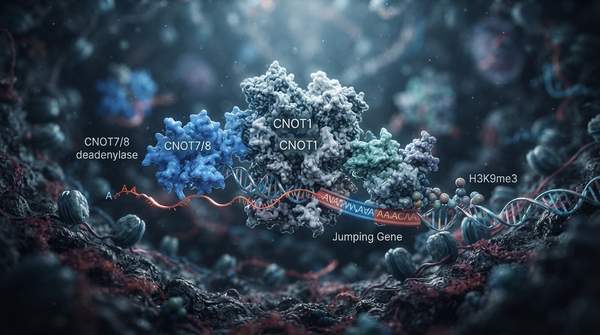
Isotopic signatures from manakin species, showing ranges of -23.7 to -32.7 ‰ for δ(13)C and 6.0 to 9.9‰ for δ(15)N, confirm a highly specialized fruit-based diet across many species, according to pubmed.ncbi.nlm.nih.gov. This consistent dietary evidence, combined with their ability to consume unripe fruits, paints a picture of extreme fruit specialization. It suggests that evolutionary 'loss' – like abandoning ancestral sweet taste receptors – can paradoxically drive a species towards a powerful, novel specialization. Such a path challenges the linear view of evolution, revealing a more circuitous route to ecological dominance.

Manakins in Their Ecosystem

White-ruffed Manakins, along with roughly 20% of Costa Rica's bird species, undertake seasonal migrations up and down mountain slopes annually, according to aliceboyle. These movements likely follow the shifting availability of their specialized fruit diet across varying altitudes. The profound influence of their diet on their ecological role, shaping their very presence within the ecosystem, is highlighted by these migrations. It's a delicate dance between avian physiology and environmental rhythms, driven by the simple need for sustenance.

Long-term research on White-ruffed manakins at Parque Nacional Volcán Tenorio, ongoing since 2016 according to aliceboyle, provides critical insights. Continuous observation allows scientists to decipher the complex interplay between specialized diets, migratory patterns, and environmental shifts, revealing the birds' adaptive strategies to their dynamic food sources. These studies offer a window into the long-term resilience of species facing ecological pressures.

Unanswered Questions and Future Directions

Machaeropterus regulus showed distinct isotopic differences compared to other manakin species studied, according to pubmed.ncbi.nlm.nih.gov. Despite shared adaptations, notable dietary variations exist among individual manakin species. A singular 'manakin' diet oversimplifies their diverse evolutionary trajectories. For example, while highly specialized fruit-eaters, some species, like the Red-capped Manakin, have been observed plucking and eating insects from foliage, according to birdsoftheworld. A degree of dietary flexibility, a crucial buffer against the unpredictability of fruit availability, is suggested.

New avenues for research into niche partitioning are opened by these observed dietary differences. Scientists might investigate how specific species fine-tune their adaptations to exploit distinct fruit resources. This includes exploring how the repurposing of taste receptors and digestive enzyme activity varies across the manakin family, potentially revealing even more nuanced strategies for survival. The manakin's story, it seems, is still being written, with each species offering a unique chapter.

The manakin's story suggests that the future of dietary adaptation research will likely uncover more instances where evolutionary 'losses' paradoxically enable profound new specializations.

Tags

EvolutionOrnithologyGeneticsAnimal BehaviorSensory BiologyFruitUmamiManakins
DG

David Grossman

Correspondent

As a Correspondent for Science and Discovery, David Grossman covers Earth, environment, and life sciences with a focus on ecology and conservation. His narrative reporting brings readers directly into the field to explore the vital scientific efforts shaping our understanding of biodiversity and climate science.

More from Life & Biology

A cosmic vista illustrating the immense timescale of evolution, highlighting Earth's unique journey towards complex life and civilization.

What Are Major Evolutionary Transitions and How Do They Occur?

Imagine a cosmic clock where the ticks mark major evolutionary leaps.

Marcus Cole· Jul 15
The tree of life interwoven with DNA strands and fossil records, symbolizing the evolution of evolutionary theory and the Extended Evolutionary Synthesis.

What is the Extended Evolutionary Synthesis?

In 2014, a prominent article in Nature directly posed the question: 'Does evolutionary theory need a rethink?

David Grossman· Jul 10
Abstract representation of complex molecules assembling, symbolizing the core concepts of Assembly Theory and its challenge to defining life and evolution.

What is Assembly Theory and why does it challenge definitions of life?

A 2023 paper, "Assembly theory explains and quantifies selection and evolution," proposed a new framework for life, but its very title immediately drew criticism for being misleading.

David Grossman· Jul 9
A glowing, complex synthetic cell named SpudCell at the center of a futuristic laboratory, representing the breakthrough in engineered life.

What is Synthetic Life and Why Does It Matter for Our Future?

Scientists have engineered a cell, dubbed SpudCell, that embodies most characteristics of life, blurring the lines between natural and artificial existence, The New York Times reports.

David Grossman· Jul 8

Trending Now

1
Inside the Original Med Bed System Anti Aging Bed: A Closer Look at Its Patented Technology

Inside the Original Med Bed System Anti Aging Bed: A Closer Look at Its Patented Technology

Health And Medicine· 45 views
2
VinDynamics' humanoid robot, Dyno, unveiled at Computex 2026, standing in a futuristic tech expo with advanced displays.

Key AI Gadgets and Robotics at Computex 2026

Gadgets And Gear· 10 views
3
A glowing 3-4 nanometer molecular nanodiamond, synthesized with atomic precision, representing a breakthrough in materials science and quantum technology.

Scientists Achieve Bottom-Up Synthesis of Molecular Nanodiamonds

Cosmos And Space· 5 views
4
Reading the 2026 Immediate Mental Health Demand Signals: What Lyf Support Sees Coming

Reading the 2026 Immediate Mental Health Demand Signals: What Lyf Support Sees Coming

Health And Medicine· 2 views
5
A colossal asteroid impacts Earth, causing a global cataclysm and a massive explosion that wipes out life.

What is a Bolide Impact and How Does it Cause Mass Extinction?

Earth And Environment· 1 view
6
The Ultimate Guide to Choosing Your First BONVIE Daily Supplement

The Ultimate Guide to Choosing Your First BONVIE Daily Supplement

Health And Medicine· 1 view