The story of where we came from is being actively rewritten, and three recent lines of evidence explain why. The small-brained Homo naledi appears to have mourned its dead; ancient DNA has revealed that our ancestors interbred with Neanderthals after lineages split as much as 800,000 years ago; and our own species now looks roughly 300,000 years old rather than 200,000. Each finding forced paleoanthropologists to abandon a specific assumption about how human evolution was supposed to work.
Key Discoveries Reshaping Human Evolution
The clearest way to see what has changed is to place the old model beside the revised one. The table below juxtaposes the established hypothesis for each aspect of human evolution with the understanding that new evidence required, isolating the precise impact of each discovery.
| Discovery | Previous Hypothesis | New Understanding |
|---|---|---|
| Homo naledi burials and cultural behavior | Complex, ritualistic behaviors such as mourning the dead were exclusive to large-brained hominins like Homo sapiens. | A hominin with a brain possibly smaller than a chimpanzee's shows evidence of cultural complexity and treatment of its dead. |
| Ancient DNA sequencing of Neanderthals and Denisovans | Modern humans and Neanderthals were separate lineages whose split ended in replacement, with no meaningful later contact. | Despite splitting up to 800,000 years ago, the two lineages mated repeatedly during the last Ice Age, leaving Neanderthal DNA in many people today. |
| Revised dating of Homo sapiens fossils | Our species was roughly 200,000 years old. | Discoveries in recent years pushed the age of Homo sapiens to about 300,000 years. |
One caution belongs alongside this comparison: the Homo naledi interpretation rests on reading archaeological evidence as intentional treatment of the dead, and that reading remains debated. The claim's impact on the field is real even where the debate is unresolved.
Homo naledi: Complex Behavior from a Small-Brained Hominin
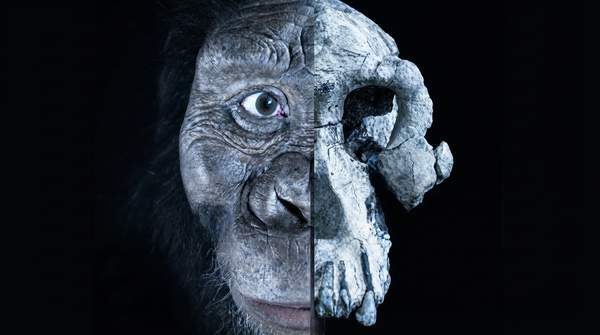
For decades, the size of a hominin brain served as a rough proxy for its cognitive ceiling. Ritual behavior, symbolic thought, and care for the dead were treated as late arrivals, tied to the enlarged brains of our own lineage. Homo naledi broke that equation. As archaeologist Penny Spikins of the University of York notes, the species' brain may have been smaller than a chimpanzee's, yet there is evidence its members were culturally complex and mourned their dead.
The species itself is a recent addition to the family. Spikins counts it among the short, small-brained humans—under five feet tall—that Homo sapiens may have encountered, part of a roster of hominins that has grown to 21 known species, including Homo longi, identified as recently as 2018. The naledi findings matter precisely because they decouple the traits we once bundled together: you no longer need a big brain to get complex culture.
That decoupling is the analytical point. If brain size and behavioral complexity can move independently, then the old ladder—small-brained and simple below, large-brained and sophisticated above—collapses. Reporting in New Scientist by Michael Marshall frames the broader shift the same way: rather than a sudden explosion of intelligence, it appears that Homo erectus, the Neanderthals, and many others "all walked so we could run."
Ancient DNA: Unraveling a Braided Stream of Humanity
The second discovery came not from a dig but from a laboratory. Since scientists fully sequenced the first ancient human genome in 2010, genetic data from thousands of individuals have reshaped our picture of the species' origins and early history, as archaeologists Elizabeth Sawchuk and Mary Prendergast describe. The headline finding was interbreeding: although the modern human and Neanderthal lineages split up to 800,000 years ago, the two mated a number of times during the last Ice Age, which is why many people today carry Neanderthal DNA.
The genetic record also gave the Denisovans their place in the story. The ancient hominin species was discovered through material excavated in 2010 in the East Gallery of Denisova Cave, and it now stands alongside Neanderthals among the robust, stocky relatives our ancestors may have met. Spikins suggests Homo sapiens may have encountered as many as eight different types of human in total.
What this overturns is the replacement model in its strict form. If lineages that diverged hundreds of thousands of years apart could still produce offspring together, then human evolution was never a set of isolated branches. It was a network of populations that separated, reconnected, and exchanged genes—a structure with consequences for how we define "species" at all.
The Methodological Revolution: Driving New Insights
The acceleration in discoveries is not an accident of luck in the field; it reflects a change in what evidence scientists can extract. The rise of biomolecular archaeology, as the Leakey Foundation's Meredith Johnson reports, has created new opportunities for interdisciplinary collaboration between field-based and lab-based scientists. A fossil that once would have been described only by its shape can now be tied to genetic lineages, and sediments that once yielded only rough estimates can be anchored more precisely.
Ancient DNA sequencing is the clearest driver. The 2010 sequencing of the first ancient human genome opened a technique that has since generated data from thousands of individuals, and it is what made the interbreeding findings possible at all—mating events from the last Ice Age leave no visible trace in bones, only in genomes. Without the lab, the braided stream would have stayed invisible.
The pattern extends beyond genetics. Discoveries in recent years have also forced revisions to fundamental dates, such as the age of our own species, which moved from about 200,000 to about 300,000 years as new finds accumulated. Better dating and better molecular tools together explain why, as Marshall put it in reviewing 2023, discoveries "continued to come thick and fast."
A More Complex Human Story: The Braided Stream Consensus
Put the three findings side by side and a single revised picture emerges. Human evolution, as Johnson summarizes, looks less like Darwin's tidy tree and more like a muddy, braided stream. Spikins makes the same point from the fossil side: Homo sapiens were not the inevitable evolutionary destination, and they do not fit into any simple linear progression or ladder of progress.
The braided stream model has three concrete features supported by the evidence. First, multiplicity: there are now 21 known species of human, far more than earlier accounts allowed. Second, coexistence and contact: our ancestors may have met as many as eight of them, from Neanderthals and Denisovans to small-brained species like Homo naledi. Third, exchange: interbreeding between long-separated lineages means the branches of the stream periodically merged back together.
This also reframes the naledi debate. Whether or not the burial interpretation survives scrutiny, the species already demonstrates that traits once arranged in a sequence—brain size, culture, symbolism—can appear in unexpected combinations across the family tree. The stream is muddy because the combinations are messy, and that messiness is now the working assumption rather than an embarrassment.
Embracing a More Complex Human Story
Readers should recognize that the human evolutionary narrative is continuously being revised and is far more intricate than previously thought, moving away from a simple linear progression. The practical takeaway is not a settled answer but a changed expectation: any account that presents human origins as a single-file march toward Homo sapiens is out of date. The measurable indicator to watch is the continued publication of new fossil finds and genetic analyses that further diversify the hominin family tree or push back evolutionary timelines—each one a test of whether the braided stream, and the assumptions it overturned, continues to hold.
Sources
- Six recent discoveries that have changed how we think about human origins — The Conversation
- The 2023 discoveries that made us rethink the story of human evolution — New Scientist
- Archaeological Discoveries Are Happening Faster Than Ever Before — The Leakey Foundation
- Archaeological discoveries are happening faster than ever before, helping refine the human story — The Conversation