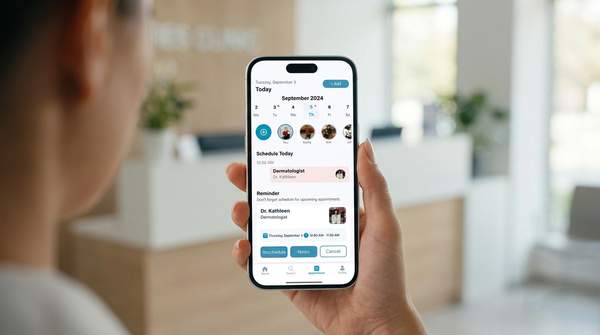
At the height of the COVID-19 pandemic, FDA guidance became the critical differentiator for many clinical trials. Studies that followed these new recommendations managed to finish their work, while others struggled to maintain operations, according to NCBI. This period of rapid adaptation showed us how crucial clear rules are when research faces unexpected global health crises.
But here's the catch: decentralized clinical trials, or DCTs, promise unparalleled patient access and the collection of real-world data. Yet, they also introduce significant new challenges, especially concerning investigator oversight and participant safety. We're grappling with how to get the benefits without compromising care.
While fully decentralized trials offer a compelling vision, hybrid models are likely to become the dominant approach. These models allow the industry to incrementally integrate innovation while upholding essential safety and regulatory standards, offering a responsible path forward for clinical research in 2026.
The Pandemic's Unintended Innovation
The global health crisis of COVID-19 brought many traditional research methods to a halt. Travel restrictions and social distancing made on-site patient visits nearly impossible, forcing researchers to find new ways to keep studies going. This disruption quickly accelerated the adoption of digital health technologies for clinical trials.
We saw a rapid shift toward decentralized and hybrid models. These approaches proved crucial for maintaining trial continuity and initiating new studies under difficult circumstances. This period showed us that adaptable trial designs are not just convenient, but essential for resilience.
The urgent need for continuity during the pandemic led to a cautious, iterative learning process. We realized that a complete leap to full decentralization wasn't feasible. Instead, a hybrid approach became the immediate solution, helping to ensure both progress and safety.
Beyond Convenience: The Regulatory Imperative
- Underserved Patient Recruitment — Regulators expect decentralized clinical trials to facilitate the recruitment of underserved patients, according to PMC. This focus aims to address historical inequities in research participation.
- Representative Data — Data collected in decentralized clinical trials is expected to be more representative of the real world, according to PMC. This means better insights for diverse populations.
These regulatory expectations show that decentralized trials are not just about making things easier. They are about enhancing patient equity and improving the generalizability of clinical data. We are moving towards a system that truly reflects the diverse populations it serves, ensuring that new treatments work for everyone.
Navigating New Risks in a Decentralized Landscape
While decentralized clinical trials promise broader access, they also introduce significant ethical and practical dilemmas. A major concern involves investigator oversight, according to PMC. How do we ensure proper monitoring when physical examinations and face-to-face contact are limited?
Participants' safety is another key challenge highlighted by PMC. Without direct, in-person interactions, it becomes harder to quickly identify and address adverse events. This means the very promise of broader access is fundamentally undermined if we cannot guarantee robust patient safety.
The industry's push for decentralized trials to recruit underserved patients and gather more representative data is directly at odds with fundamental concerns about participant safety and investigator oversight. Companies pushing for fully decentralized trials without robust hybrid safeguards are prioritizing speed over patient well-being, a gamble that could erode public trust and regulatory approval.
The Rise of E-Clinical Solutions
The need for remote management in decentralized clinical trials has spurred rapid innovation among technology providers. Companies are developing new e-clinical solutions to bridge the gap between virtual and physical trial components. This helps us manage complex data streams and ensure communication.
Despite the push for decentralization, effective management often still requires a central hub. For instance, IQVIA's "One Home for Sites" platform, mentioned by Vocal Media, aims to streamline management for sites. This persistent need for centralized platforms within a decentralized framework indicates that true decentralization remains an elusive ideal.
E-clinical solution providers are clear winners in this evolving landscape. They offer the tools necessary to make hybrid models work effectively. Their innovation helps us manage the complexities, but it also shows that even decentralized approaches rely on strong, integrated systems.
The Hybrid Future of Clinical Research
Hybrid models are not just a temporary fix; they are the pragmatic bridge to future innovation in clinical trials.
- Hybrid clinical trials, which combine on-site and decentralized elements, are proposed as a way to facilitate future learning with decentralized clinical trials, according to PMC.
This approach allows us to progressively integrate the benefits of decentralization while carefully addressing the challenges of remote trial management. It's about taking measured steps, learning as we go, and ensuring patient safety remains our top priority. The success of trials during the COVID-19 pandemic, heavily influenced by FDA guidance, reveals that regulatory clarity and adaptability, not just technological innovation, are the true bottlenecks for widespread, safe adoption of decentralized clinical trials.
We are not abandoning the vision of broader access and diverse data. Instead, we are building a more responsible framework to achieve it. Hybrid models help us manage the complexities of ensuring safety and oversight, making them the most viable path for immediate industry adoption.
What This Means For You
- You can expect clinical trials in 2026 to increasingly offer flexible participation options, bringing research closer to your home.
- New treatments will likely be developed using data from more diverse patient populations, meaning they might be more effective for a wider range of people.
- Regulators are actively shaping the future of decentralized trials, prioritizing both innovation and patient safety.
- The focus on hybrid models means clinical research is evolving responsibly, balancing cutting-edge technology with essential human oversight.
The evolution towards decentralized clinical trials is inevitable, but a thoughtful, phased adoption via hybrid models is essential for maximizing benefits while safeguarding patient welfare and data integrity. This balanced approach ensures that progress in medicine benefits everyone safely.
What are the benefits of decentralized clinical trials in 2026?
Decentralized clinical trials in 2026 significantly boost patient diversity by reaching individuals in rural areas or those with mobility limitations. This broader access helps gather data from a more representative population, leading to treatments that work for more people. For example, trials can now include patients living hundreds of miles from a research center, who were previously excluded.
What are the challenges of decentralized clinical trials?
While promising, decentralized trials face hurdles like ensuring data privacy and cybersecurity for remote data collection. Integrating various digital health tools, such as wearables and apps, into a unified platform also presents technical complexities. Additionally, training patients and local healthcare providers on new digital protocols can be time-consuming.
How is technology transforming clinical trials?
Technology is rapidly transforming clinical trials by enabling remote monitoring through wearable devices and telehealth platforms, reducing the need for frequent site visits. Artificial intelligence (AI) is also being used to analyze vast datasets, speeding up drug discovery and patient recruitment processes. These tools create more efficient and patient-friendly research experiences.
By the end of 2026, the continued integration of e-clinical solutions, like those offered by companies such as IQVIA, will refine hybrid trial models, making patient-centric research more accessible and safer than ever before.