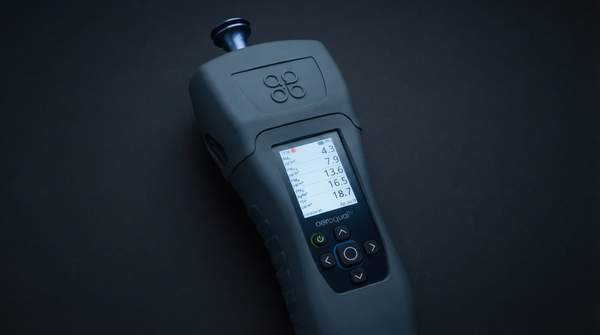
There is no single best portable air quality monitor, and the EPA itself stops short of endorsing any product. What matters is fit: the pollutants you need to track, how your data will be stored and shared, how portable your device must be, and how accurate your readings need to be. Using criteria drawn from EPA guidance and peer-reviewed citizen science research, this article walks through those decisions and applies them to two concrete examples — the Atmotube PRO and the AirGradient Open Air — to show how very different devices serve very different projects.
Defining Your Citizen Science Air Monitoring Goals
Start with the question that determines everything else: what are you actually trying to learn? A commuter tracking personal exposure to particulates on a walk to work needs a different device than a neighborhood group mapping pollution hotspots around a school or freight corridor. The first project follows a person; the second stays fixed in place and runs continuously.
The EPA's citizen science guidance describes what it calls Next Generation Air Monitors — devices that typically cost between $100 and $5,000, are highly portable, require minimal training, and are inexpensive to operate. That wide price range reflects the spread of capabilities. A palm-sized sensor logging a single pollutant to a phone sits at one end; a multi-pollutant, networked instrument sits at the other. Your goal narrows the field before any specification sheet is consulted.
Be precise about pollutants, too. Particulate matter (PM2.5 and PM10), volatile organic compounds (tVOC), carbon dioxide, nitrogen oxides, and ozone are distinct concerns with distinct health meanings. A device that cannot measure your pollutant of interest is useless no matter how polished its app is. Write the target pollutant down before shopping; it is the first filter.