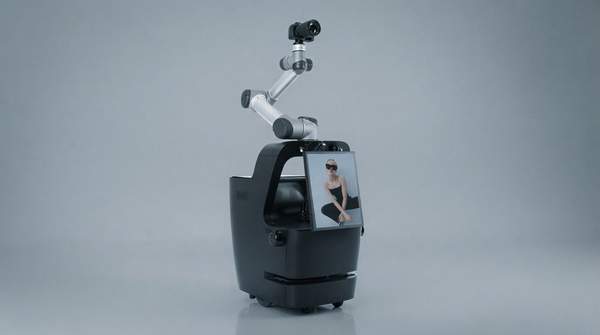
An Indian startup, iHub Robotics, has already begun exporting its semi-humanoid robot, Tara Gen-1, to the UAE and Saudi Arabia. This early market penetration by a regional company proves Uttar Pradesh's readiness for international competition, directly challenging established perceptions of India's deep-tech capabilities.
Uttar Pradesh is making multi-billion dollar investments and policy moves to become a global AI and robotics powerhouse, but its rapid transformation and existing international reach remain largely unrecognized by the global tech community. This disconnect obscures a significant shift in the deep-tech landscape.
Uttar Pradesh is poised to significantly disrupt global deep-tech manufacturing and innovation landscapes, attracting substantial foreign investment and talent, potentially shifting economic power.
The Scale of Ambition: Billions in Investment and Capacity
The Uttar Pradesh Cabinet approved the Data Center Policy, aiming to attract ₹2 lakh crore in investment and add 2 GW of data center capacity, according to CNBC TV18. Concurrently, a proposed AI and computing hub plans to host five lakh advanced high-performance chipsets, as reported by Times of India. These figures reveal a state-backed drive to build a foundational ecosystem for advanced technology. The scale of these commitments suggests Uttar Pradesh is not merely participating, but aiming to dominate a segment of the global AI and robotics market.
Building the Future: Hubs, Clusters, and Advanced Facilities
| Facility | Location | Size/Capacity | Key Features |
|---|---|---|---|
| U Hubs (Centres of Excellence) | Lucknow & Noida | N/A | Deep-tech innovation, with a budgetary provision of ₹100 crore for FY27, according to ET Government. |
| AI & High-Performance Computing Hub | Off Yamuna Expressway | 289-acre, one gigawatt | Planned for artificial intelligence and high-performance computing, according to Times of India. |
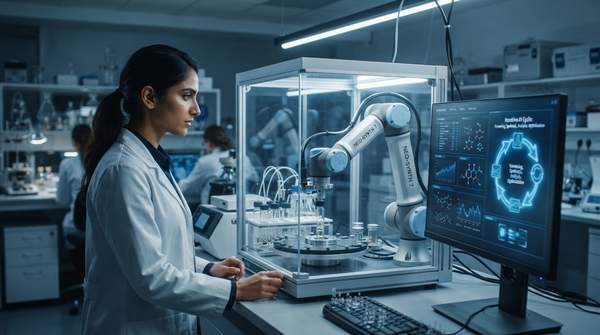
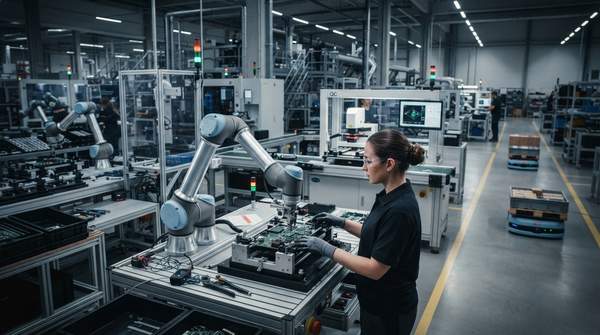
| PRAGATI Cluster | Noida | Approximately 75 acres | Integrated robotics and advanced manufacturing, including testing, prototyping, AI compute, GPU clusters, and incubation, according to ET Government. |
footnote: Data compiled from ET Government and Times of India (2026).
The sheer scale and comprehensive nature of these planned hubs and government-backed centers reveal a deliberate strategy: to forge a self-sufficient, end-to-end deep-tech ecosystem. This approach aims not just to bolster Uttar Pradesh's AI and robotics capabilities, but to insulate it from external supply chain vulnerabilities, a critical advantage in advanced manufacturing.
Strategic Advantages: Policy, Sustainability, and Location
The one-gigawatt data center, planned off the Yamuna Expressway, will operate on 24x7 carbon-free energy, sourced from renewable systems, according to Times of India. This integration of sustainable energy is a deliberate move, designed to attract deep-tech companies focused on environmental footprint reduction and to establish a green tech advantage.
Proximity to key logistics infrastructure also guides development. The PRAGATI cluster, integrating robotics testing and manufacturing, is strategically located near the Noida International Airport. This placement confirms Uttar Pradesh is building a complete deep-tech value chain, positioning it as a direct competitor to established tech ecosystems that often rely on distributed facilities. The combined strategic integration of sustainable energy, proximity to logistics, and a supportive policy environment underscores a calculated approach to attract and support advanced manufacturing.
Early Successes: Startups and Global Capital
IHub Robotics, the Uttar Pradesh startup exporting semi-humanoid robots, reported raising Rs 4.3 crore (about $520K) in a pre-seed funding round from U.S. investors, according to Entrackr. However, the same publication also stated the company had previously raised $20 million in the same round in October 2023, This significant discrepancy in reported funding amounts creates confusion about the actual financial backing for a key success story within the local startup ecosystem. Such inconsistencies raise questions about the transparency and maturity of the funding landscape, even as the region pushes for global recognition.
Despite this funding ambiguity, the early export success of iHub Robotics' Tara Gen-1 to the Middle East proves Uttar Pradesh's deep-tech ecosystem is already capable of producing globally competitive products. This directly challenges the notion that Uttar Pradesh is merely an aspirational player. The foreign investment, even with conflicting figures, confirms the region's potential and its ability to attract global capital to its burgeoning tech sector.
Given Uttar Pradesh's aggressive state-backed investments, strategic infrastructure development, and early export successes, the region appears poised to become a significant, albeit under-recognized, global deep-tech manufacturing and innovation hub by 2026, potentially reshaping established supply chains and investment flows.