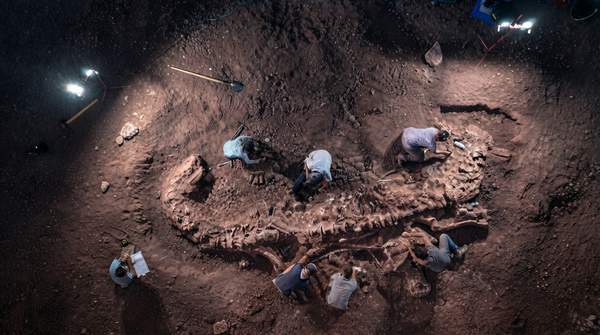
Fossils form through distinct processes, and the pathway a dead organism takes depends on two things: what its body is made of and where it comes to rest. Rapid burial in soft, accumulating sediment is the near-universal starting point, according to the British Geological Survey, which describes it as a requirement for fossilization. From there, the story diverges. Mineral-rich groundwater can turn wood and bone to stone; dissolving tissue can leave only an imprint; heat and pressure can flatten a leaf into a carbon film; or an organism can escape decay entirely in amber, ice, or tar.
Fundamental Factors: Organism and Environment
The U.S. National Park Service lays out the two variables that govern every case: the composition of the organism itself and the environment in which it is buried. Hard materials such as bone, teeth, and shell survive the interval between death and burial far better than soft flesh, which scavengers, weather, and bacteria quickly dismantle. That is why teeth and shells crowd museum drawers while skin and muscle almost never survive.
The second variable is the depositional setting. Fossils are far more likely to form where active sedimentation is under way. As the Park Service notes, organisms that lived in marine environments, along rivers, or on floodplains are much more commonly preserved than those that died in mountains or other uplands, where remains are exposed and eroded rather than covered. The British Geological Survey explains why burial matters so much: it isolates the remains from the biological and physical processes that would otherwise break up or dissolve the body material. The Natural History Museum in London adds that fossilization requires a specific set of circumstances, making it a genuinely rare event for any individual organism.