NASA's Roman Space Telescope, now successfully launched, is poised to send back 1.4 terabytes of data every single day, a volume unmatched by any previous astrophysics mission, according to NASA (.gov). The daily deluge of 1.4 terabytes of information will challenge astronomers, forcing them to process and interpret an overwhelming flood of new cosmic revelations.
Our current understanding of the cosmos relies on limited observational data, often providing only glimpses into its vastness. The Roman Space Telescope will provide a deluge of information, promising to expose the universe's deepest secrets, shifting our foundational knowledge.
Therefore, the next decade of astronomical research will likely be dominated by the analysis of Roman's data, leading to paradigm shifts in cosmology and exoplanet science.
A New Eye on the Universe
- The Roman Space Telescope has a field of view more than 100 times larger than the Hubble Space Telescope, according to Newsweek.
- Roman will send back 1.4 terabytes of data every day, representing the highest data rate of any NASA astrophysics mission, according to NASA (.gov).
- The Roman Space Telescope is intended to hunt for planets around other stars, explore dark energy, and survey the cosmos, according to PBS.
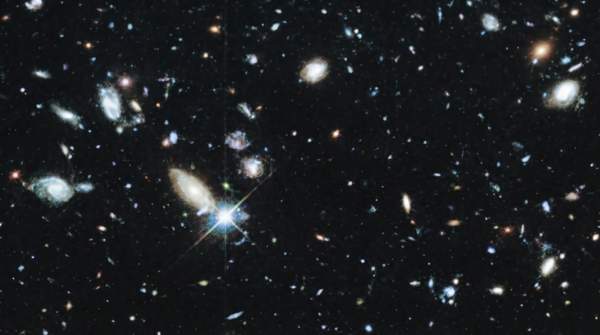
Roman's expansive field of view and immense data capacity position it to deliver a scale and depth of data that will reshape astrophysics for decades. The telescope's expansive view and immense data capacity mean astrophysicists will spend less time searching for phenomena and more time interpreting new discoveries.
The sheer volume of data from Roman fundamentally shifts the nature of discovery. Its 100 times larger field of view reveals that previous understanding of the universe was based on a narrow sample. This wider perspective could expose vast, overlooked structures or phenomena, acting as a discovery engine for unknown unknowns rather than just confirming existing hypotheses. The telescope is not just seeing more; it is seeing differently and faster, potentially identifying subtle, large-scale phenomena previously undetectable.